Keeping and Breeding of Satanic Leaf-Tailed Gecko (Uroplatus phantasticus (Boulenger, 1888)) at BION Terrarium Center
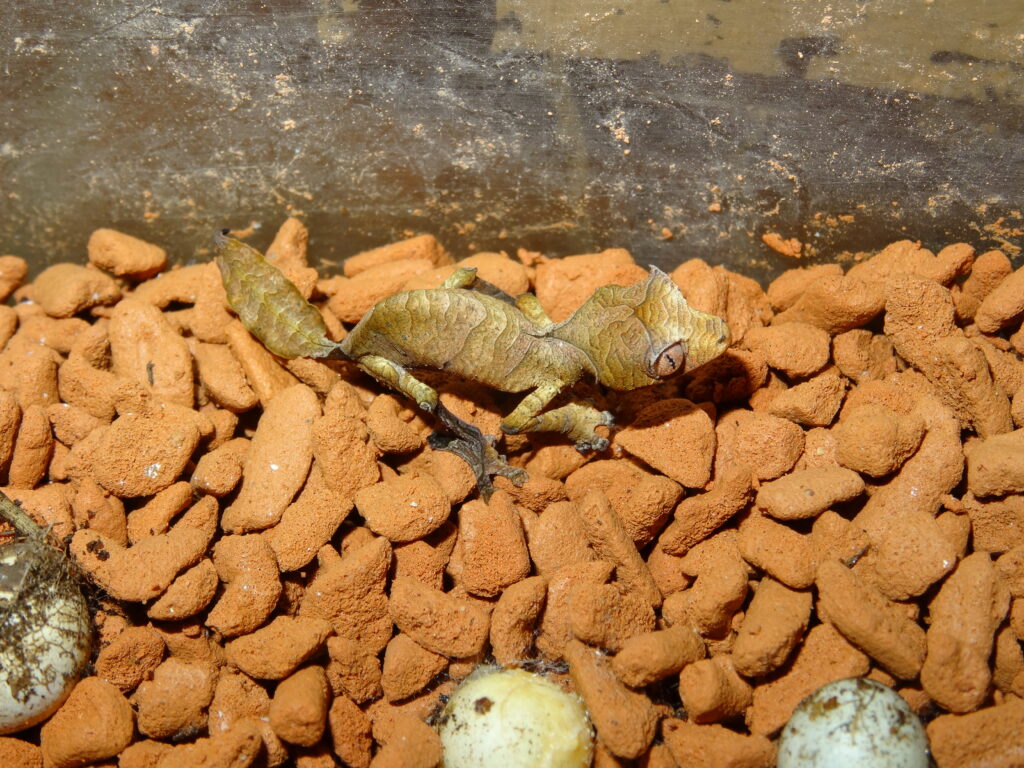
BION Terrarium Center has many years of experience in keeping satanic leaf-tailed gecko (Uroplatus phantasticus (Boulenger, 1888)).
Satanic leaf-tailed gecko(Uroplatus phantasticus (Boulenger, 1888) is one of the smallest leaf-tailed geckos.
It has total length of about 100–110 mm (3.94–4.33 in): SVL is 55–70 mm (2.16–2.75 in), TL is about 40 mm (1.57 in). The head is not flattened and terminates in a rounded snout (Bauer, 2013). A prominent row of scales in the interorbital and the occipital regions forms a V pointing on the neck (Bauer, Russell, 1989).
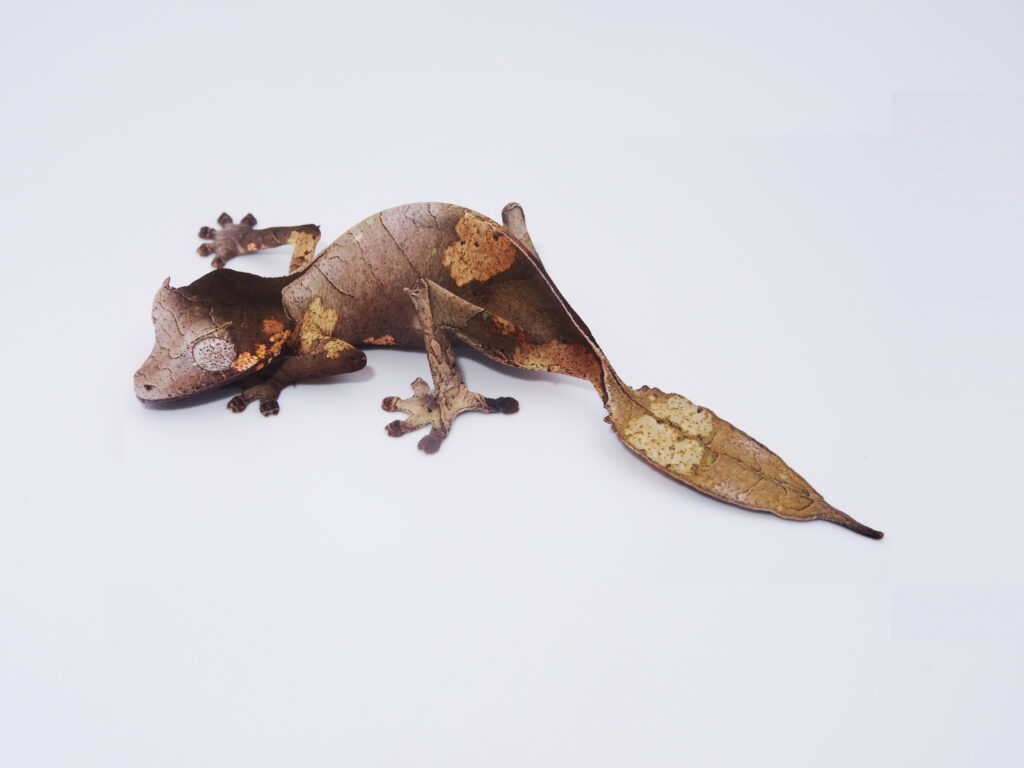
Body is laterally compressed allowing these animals to be a perfect example of phytomimesys (phytomimicry) even within the Uroplatus genus (Glaw et al., 2007). Their coloration is extremely variable: from gray to chocolate brown, beige, orange and red, sometimes with greenish spots or cream to black vertebral lines.
These geckos have no eyelids, except only a transparent coating on their eyes, and therefore they use long, movable tongues to wipe off dust or debris from their eyes. Individuals with heterochromia (different eyes’ coloration) are the most valuable for terrarium collections as well as individuals with unusual patterns and spots on the body.
Their tails imitate the shape of a leaf (Svatek, van Duin, 2001; Gehring, 2020).
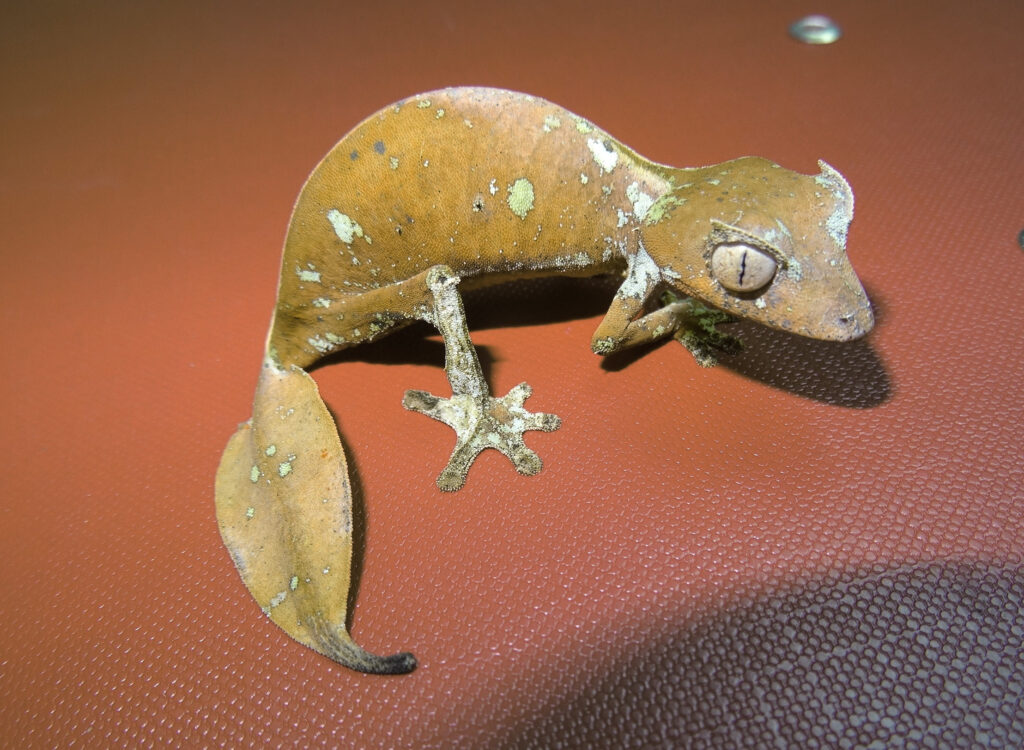
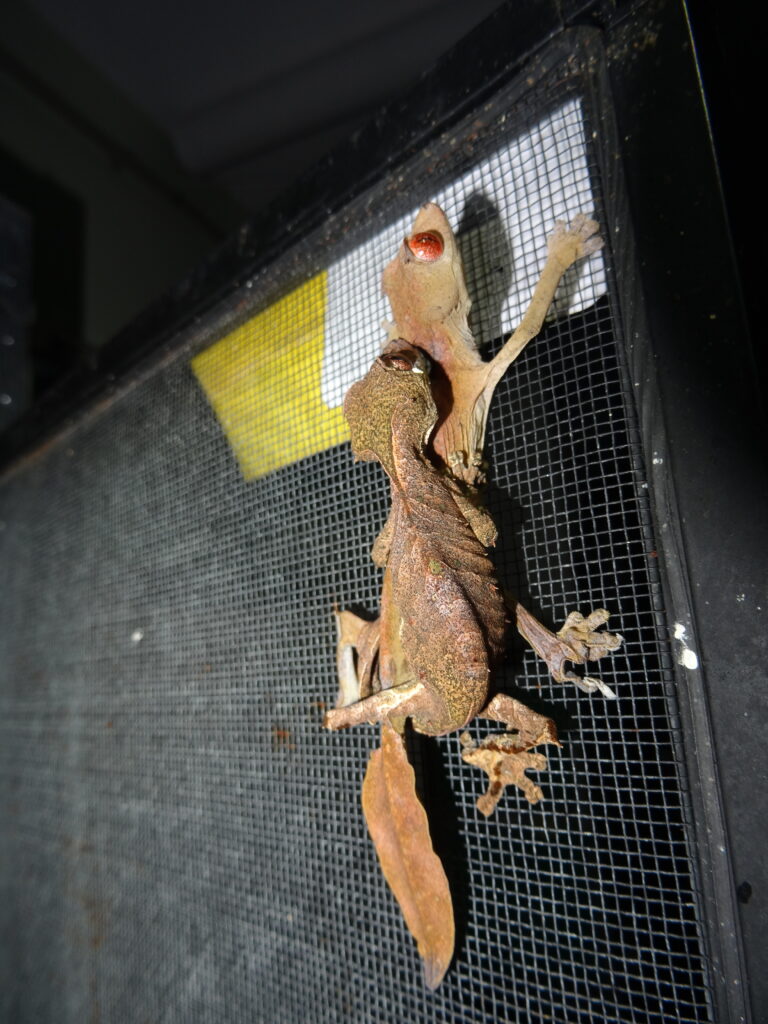
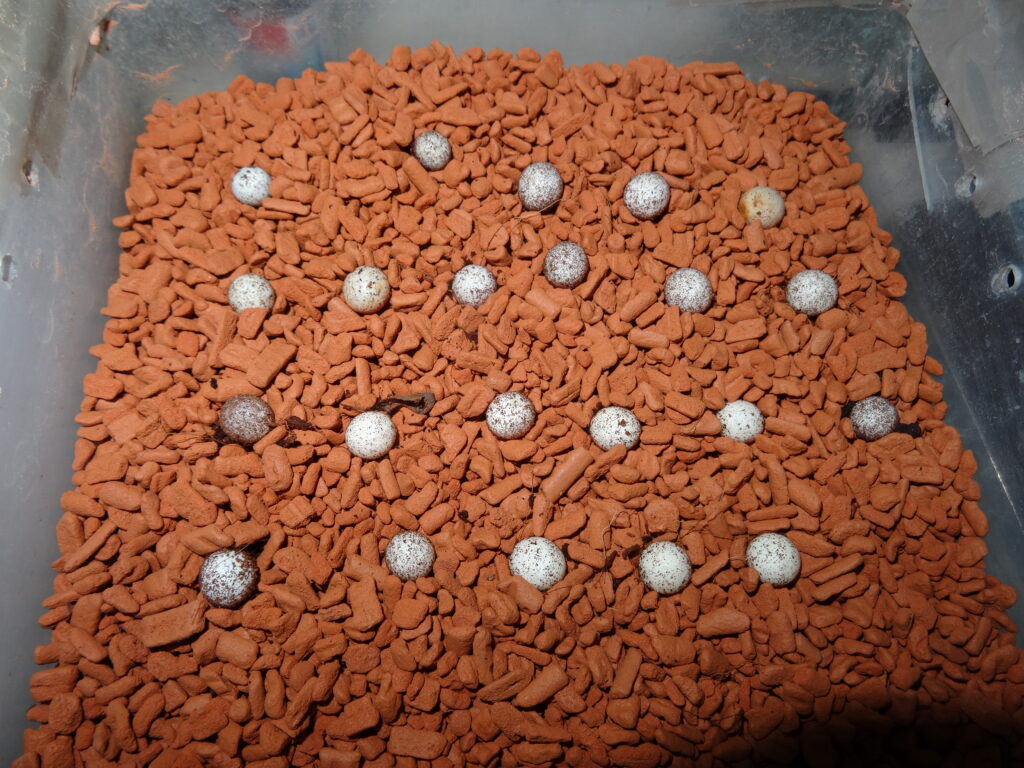
Keeping. We keep U. phantasticus separately or in pairs at 45*45*60 cm (17.7*17.7*23.6 in) terrariums, setting an opaque wall (partition) between them in the middle.
This wall can be easily installed if it is needed to separate the pair. Babies are kept separately in terrariums or plastic lunch boxes of not less than 30*30*30 сm (11.8*11.8*11.8 in).
The decoration of the terrarium includes thin horizontal and vertical branches, lianas, living plants and shards as shelters. Substrate—crushed bark, covered with dry oak leaves or paper. If you use paper on the bottom than provide a moist chamber of at least 1l filled with coconut substrate and dry oak leaves. Geckos will use it for resting and making clutches. Water dish is obligatory. Interior decoration for babies includes thin branches, paper towel instead of substrate, shallow water dish and if possible—artificial plants.
Lighting. Zoo Med 5 UVB lamp is used during breeding season for 10–14 hours per day; during resting period (Jan – Feb) for 4 hours per day.
Temperature. Daytime temperature is +24 – +25 °C (75.2-77.0 F), at night – +19 – +21 °C (66.2-69.8 F); at the time of winter dormancy – +16 – +19 °C (60.8–66.2 F). 25W incandescent lamp is used as both lighting and heating source.
Diet. Diet for adults includes Turkestan cockroaches (Shelfordella tartara), black soldier flies (Hermetia illucens) and crickets (Jamaican field cricket (Gryllus assimilis) and Mediterranean field cricket (Gryllus bimaculatus). Soft-shelled snails are used as additional food and treats, which are given 1–2 times per month. We offer 2–3 insects per head 1–2 times per week. If the animal shows sign of obesity, the frequency of feeding is reduced to 1 time per 2 weeks. It is strictly recommended not to use wild caught insects. Sometimes, if an animal is still hungry, we can offer one or two additional feeding items. We offer soft-shelled snails for females during ovogenesis more often. All insects should be gut loaded and dusted with vitamin-mineral supplementation every other feeding. Sepia or cuttlefish “bone” powder works well as a source of calcium. Insects are dusted with it prior to the feeding session.