Keeping and Breeding of Guenther’s Leaf-Tailed Gecko (Uroplatus guentheri Mocquard, 1908) at BION Terrarium Center

BION Terrarium Center has many years of experience in keeping Günther’s leaf-tail Gecko (Uroplatus guentheri, Mocquard, 1908).
Günther’s leaf-tail Gecko (Uroplatus guentheri, Mocquard, 1908) is a medium-sized species of the Uroplatus genus.
Adult specimens’ average SVL is 70–95 mm (2.75-3.74 in), TL is 30–55 mm (1.18-2.16 in) (total length 100–150 mm (3.94-5.90 in). Total length of hatchlings is about 50 mm (1.96 in). The large head ends with a blunt, rounded snout. 16–19 supralabial scales are present, rostral scale is divided.
The cylindrical body is rather flattened and lacks dermal fringe flaps (Angel, 1942). Uroplatus guentheri inhabit patches of dry deciduous forests of western and north western Madagascar. It has been found roosting in shrubs and low trees of up to 5 meters height (http://uroplatus.info/uroplatus-guentheri).
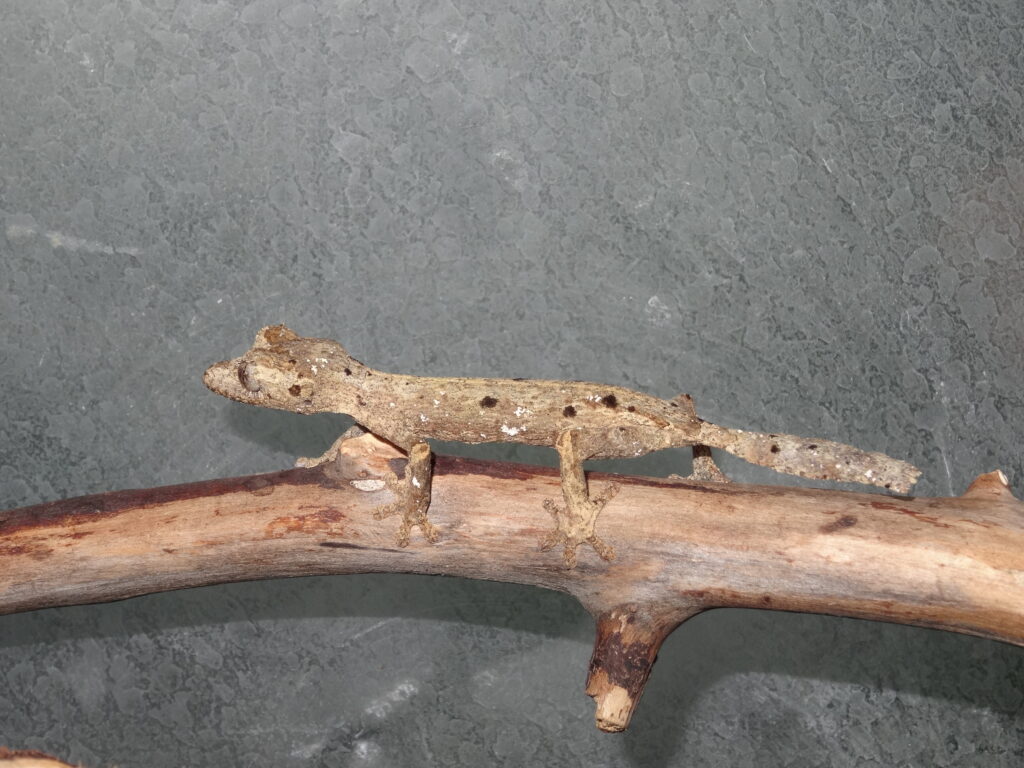
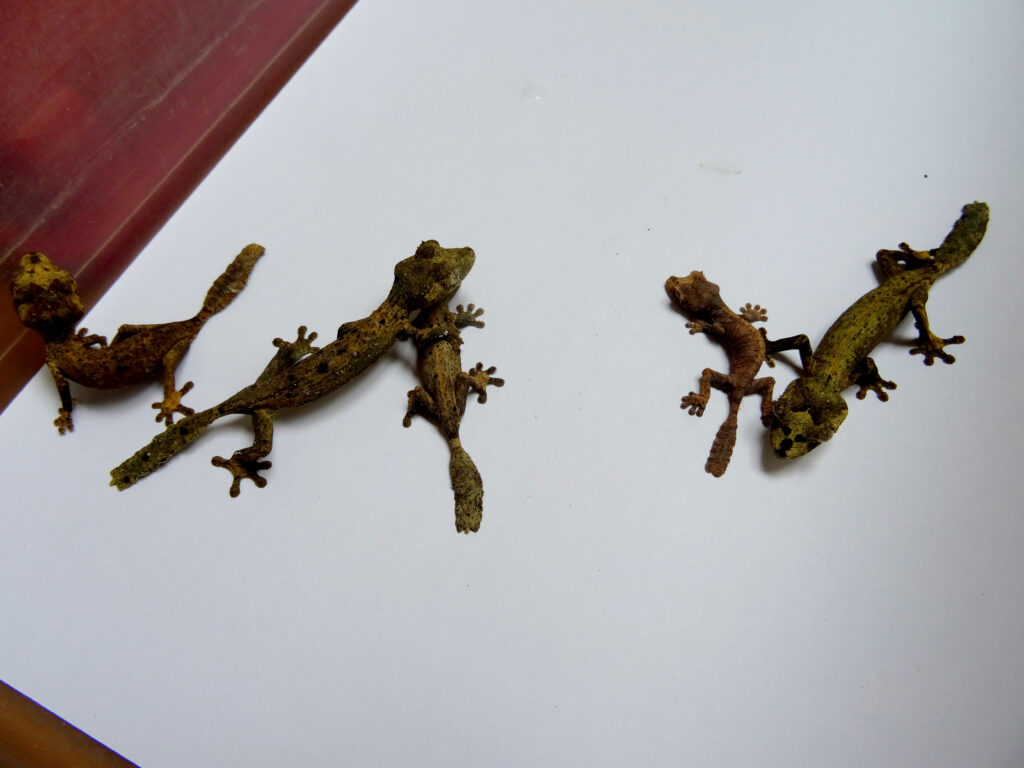
Keeping. We keep this species at terrariums of 45*45*60 cm (17,1*17,1*23,6 in) for adults, and at terrariums of not less than 30*30*30 cm (11,8*11,8*11,8 in) for babies. The decoration of the terrarium includes horizontal and vertical branches of medium thickness, lianas, layers of bark for climbing, hollows, living plants and shards as shelters. Substrate — crushed bark, covered with dry oak leaves. Paper towel with a box of wet coconut substrate as moist chamber is also an option. Water dish is obligatory.
Lighting. Zoo Med 5 UVB lamp is used during breeding season for 10–14 hours per day; during resting period (Dec. – Feb.) for 4 hours per day.
Temperature. Daytime temperature is +24 –+25 °C (+75.2 – +77.0 F), at night:+19 – +20 °C (+66.2 – +68.0 F); at the time of winter dormancy +16 – +20 °C (+60.8 – +68.0 F). 40W incandescent lamp is used as both lighting and heating source.
Humidity. Humidity level is maintained at 60–80% with double spraying (morning and evening) during the day.
Diet. The diet for adults consists of Turkestan cockroaches (Shelfordella tartara), snout moths and crickets of appropriate size. It is strictly recommended not to use wild caught insects. We offer 1–2 insects to each lizard 1–2 times per week. If the animal shows signs of obesity, the frequency of feeding is reduced to 1 time per 2 weeks.