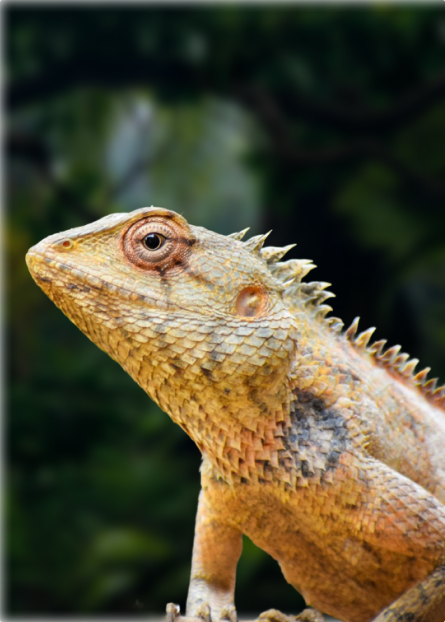
Keeping and Breeding of Dwarf Shield-Tailed Agama (Xenagama taylori Parker, 1935) at BION Terrarium Center

BION Terrarium Center has many years of experience in keeping Dwarf Shield-tailed agama (Хеnаgаmа taylori Parker, 1935).
The Shield-tailed agama (Хеnаgаmа taylori Parker, 1935) inhabits desert areas in Somalia and Ethiopia. This species is at present known to inhabit just four localities. Originally discovered in the 1930s on the border between Ethiopia and northern Somalia, where it was found in dry open woodland with a sparse ground-cover of grass and low herbage, it has recently been observed at the adjacent sides of Dargah Bur and Aware in Ethiopia.
Here it lives in a flat, semi-desert country, being active by day and occupying burrows in the sandy soil, into which it retreats head first when disturbed. Presumably, its broad and extraordinarily spiny tail serves as a very effective deterrent to any predator that might be tempted to follow this lizard into its lair. These agamas reach 10 cm (4.0 in), including the tail. The tail resembles small «shield», which gives the lizard its English name – «shield-tailed agama» (Fig. 4).
They are pretty hardy in captivity in case their needs are properly met. Хеnаgаmа taylori possess a unique behavior – at night they block with their shield-like tails the entrance of short holes they dig as their shelter. This is their original way of protection against predators.
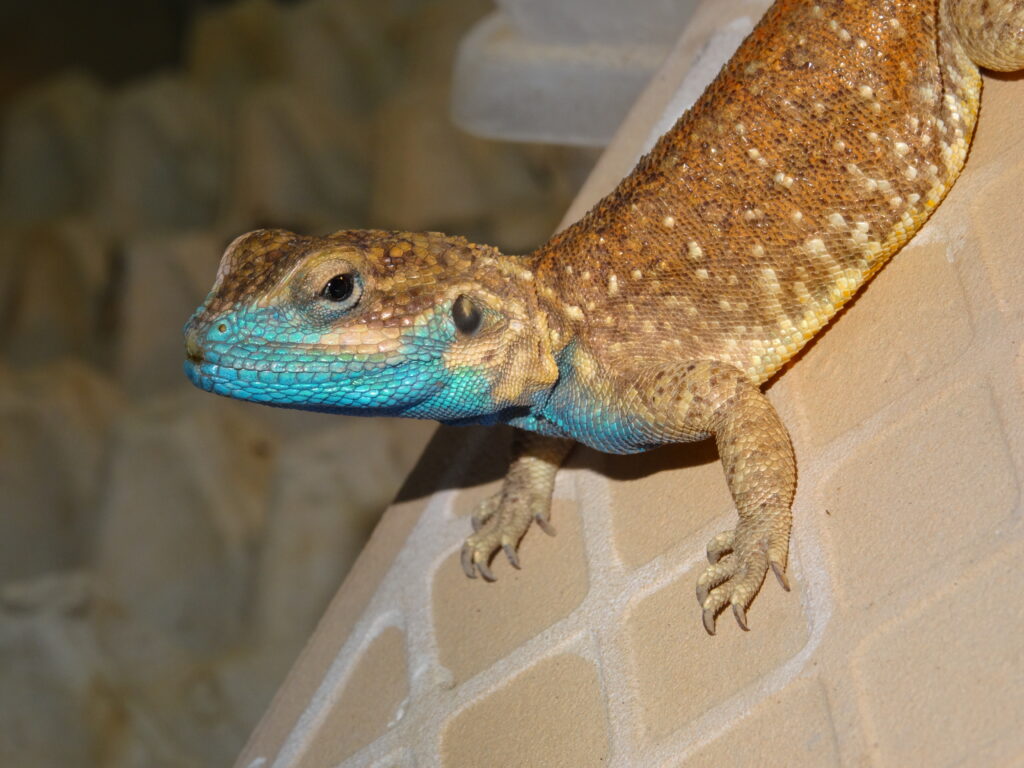
Terrarium. For adults we use 90*60*60 cm (35*24*24 in) for a breeding group 1.2 or 1.3 (Fig. 5). two males should not be kept together due to aggressive territorial behavior. We use loam mixed with clay (10–12 cm (3.9–4.7 in)) as substrate. Another option is keeping the animals without substrate, but provide a box with substrate mentioned above of adequate depth.
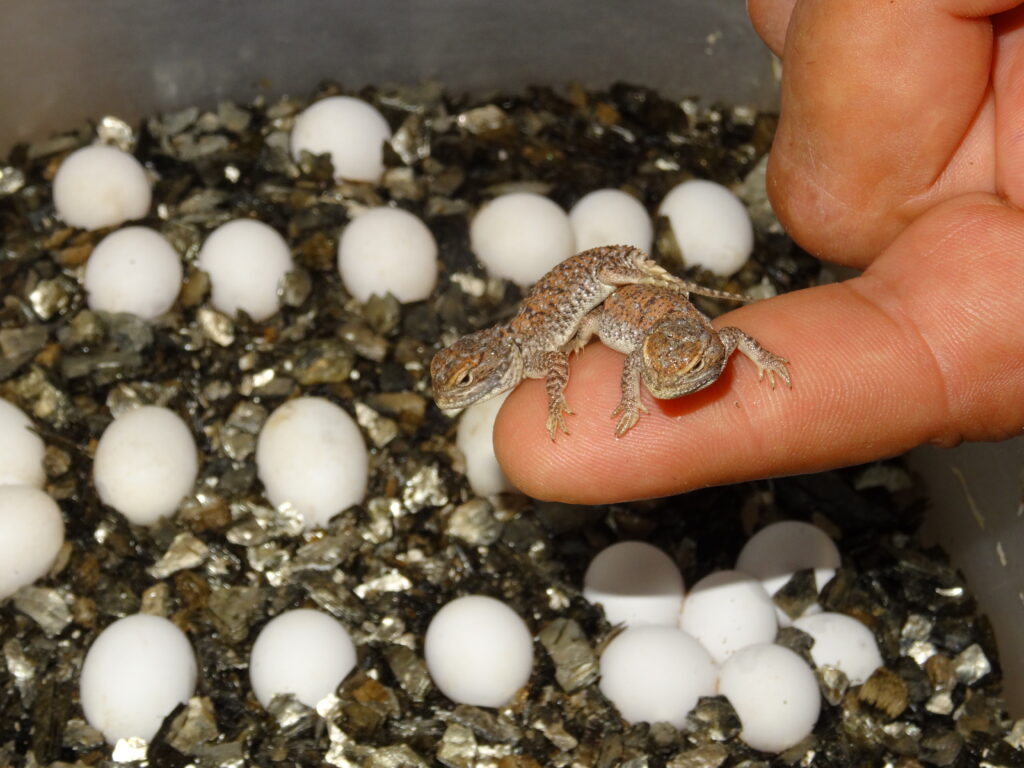
In such case we place a ceramic plate so that the lizards can reach the substrate surface and dig burrows. Babies (Fig. 6) and juveniles are kept in open plastic boxes of 60*40*30 cm (24*16*12 in) with paper towels as substrate. We also provide paper egg trays as cheap variants of hiding places if numerous animals are kept in laboratory conditions. Potsherds as hiding places are an option as well. Decoration additionally includes decorative rocks and stones to provide hiding and basking places.
Lighting. A full spectrum Zoo Med lamp “Reptisun UV.10” is used for up to 14 hours in the summer and 5–6 hours in the winter. A 60W spot lamp is used as a heat source for the same periods of time. UVB light is mandatory. Full spectrum Zoo Med lamp “Reptisun UV.10” is used to provide sufficient amount of UV lighting.
Temperature. At daytime ambient temperature is +28 °C (82.4 F), at basking place +40 – +45°C (104.0–113.0 F). At nighttime temperature drops to +22 – +24 °C (71.6 – 75.2 F).