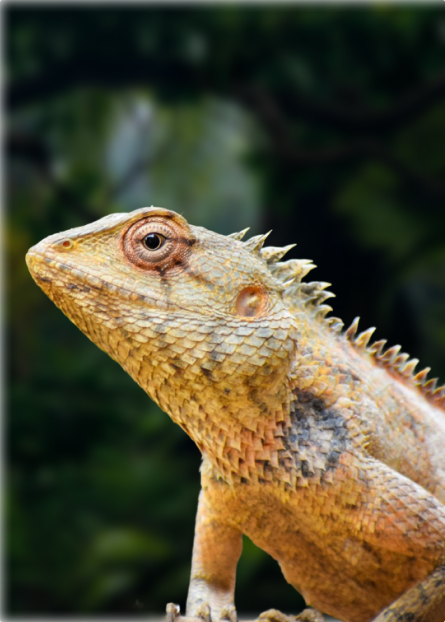
Keeping and Breeding of East Indian Leopard Gecko (Eublepharis hardwickii Gray, 1827) at BION Terrarium Center

BION Terrarium Center has many years of experience in keeping the East Indian leopard gecko (Eublepharis hardwickii Gray, 1827).
The East Indian leopard gecko (Eublepharis hardwickii Gray, 1827) inhabits the low mountain region of East India and Bangladesh: from low-mountain region Chota Nagput acros Orissa and up to the coast of the Bay of Bengal and adjacent Indian states—West-Bengal, Madhya Pradesh, Maharashtra, Andra Pradesh and Tamil Nadu (Seufer et al., 2005), where it could be found around 500-1,500 m above sea level. Eu. hardwickii is the only Eublepharis species inhabiting moist habitats (forests and hilly areas with thorn bushes. Sometimes they can be spotted on open areas in ecotone territories during rainy seasons.
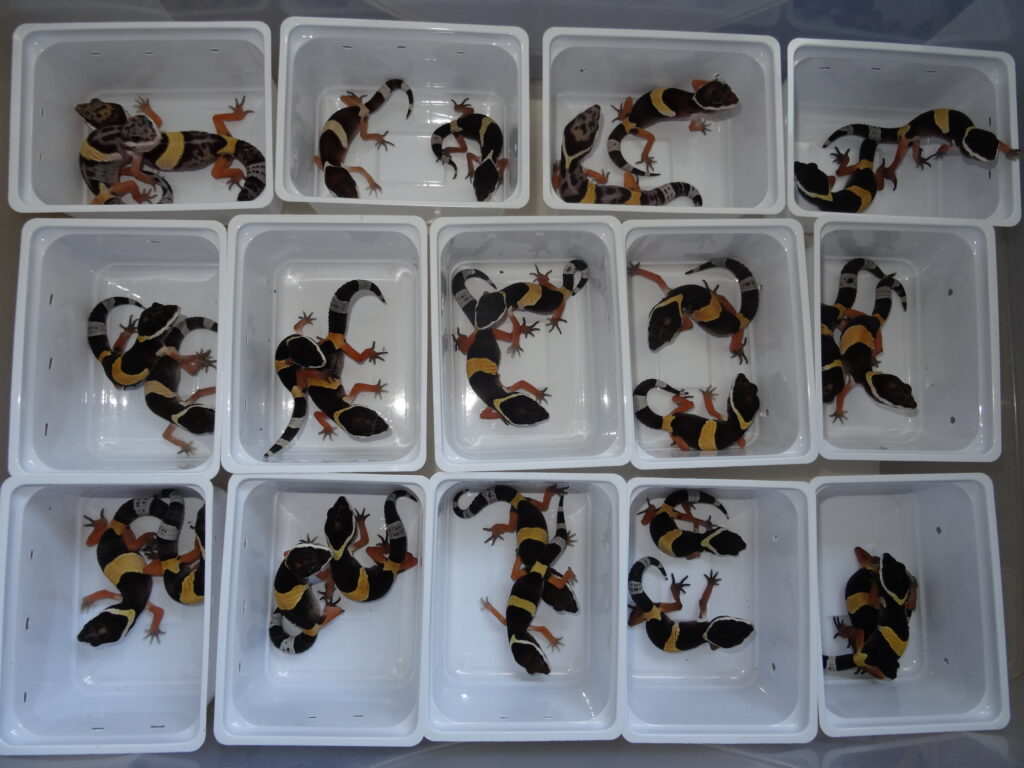
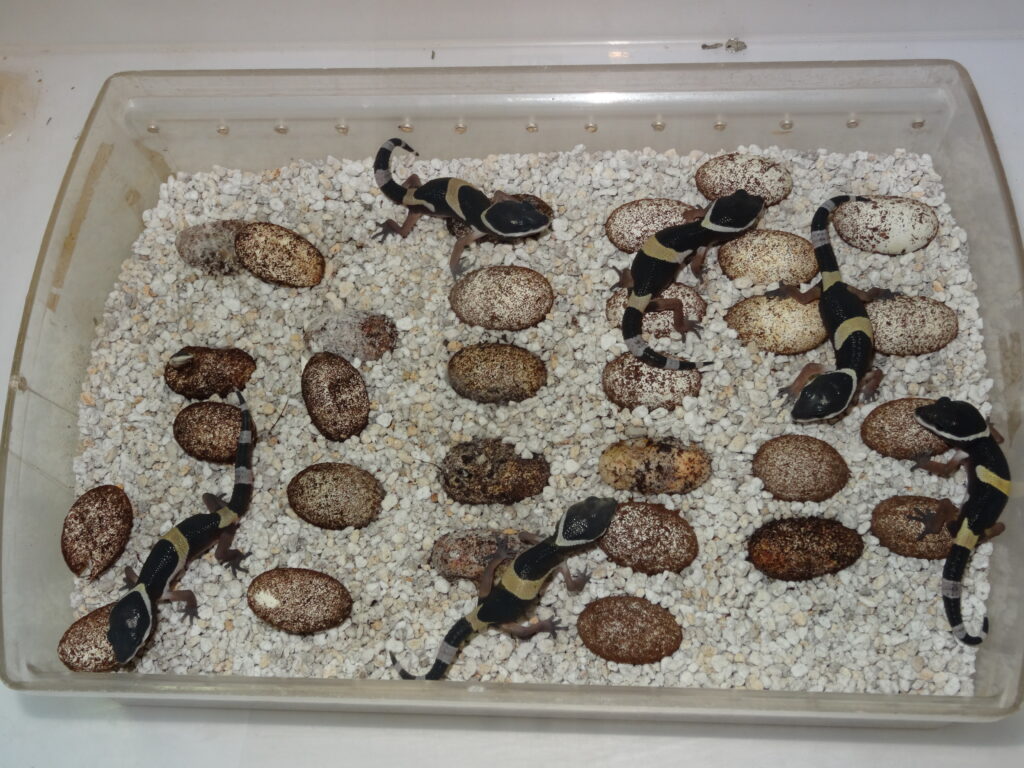
Terrarium. For an adult pair or group (1.2–1.3)—not less than of 90*50*45 cm (35.43*19.68*17.71 in) terrarium is used. Important note: the bottom area should be at least 0.2 m². We use paper sheets as substrate. Decoration includes bamboo or stony shelters, a moist chamber (with moss or coconut substrate), and a water bowl.
Lighting: We use a full spectrum lamp for lighting and a 60-W spot lamp for additional heating. Lighting period is 12/12. UV light is not required for adults; a full spectrum lamp is used for babies as well.
Temperature. Daytime temperature is +25 – +36 °C (77.0–78.8 °F), nighttime: +22 – +23 °C (71.6–73.4 °F). The temperature should not exceed +28°C (82.4 °F) at daytime.
Humidity: 70–80% (spraying with warm water 3 times a day).
Diet: adult animals receive crickets (Gryllus assimilis, Gryllus bimaculatus) (4–6 pieces 3–4 times a week), Shefordella tartara (5 insects once a week, immobilized), baby mice (once a week for gravid females and females after them making a clutch). We give Calcium 3–4 times a week by dusting the crickets, and there is a dish with Calcium powder with D3 at the enclosure.
Keeping and Breeding of Red-Banded Spiny-Tailed Lizard at BION Terrarium Center