Keeping and Breeding of Philippine Sailfin Lizard (Hydrosaurus pustulatus (Eschscholtz, 1829)) at BION Terrarium Center

BION Terrarium Center has many years of experience in keeping Philippine sailfin lizard (Hydrosaurus pustulatus (Eschscholtz, 1829)).
The Philippine sailfin dragon Hydrosaurus pustulatus (Eschscholtz, 1829) (sailfin water lizard, crested lizard, soa-soa water lizard, ibid) is an endemic oviparous lizard inhabiting the Philippines, except Palawan Island. Currently 5 different species are recognized within the Southeast Asian agamid genus Hydrosaurus: Hydrosaurus amboinensis (Schlosser, 1768) from Ambon, Seram, Sulawesi and New Guinea, H. pustulatus from the Philippines, Hydrosaurus weberi Barbour, 1911 from Halmahera and adjacent islands, Hydrosaurus celebensis Peters, 1872 and Hydrosaurus microlophus Bleeker, 1860 from the synonymy of H. amboinensis, which in turn is restricted to the central Moluccas and New Guinea (Denzer et al., 2020). You can read more about how these species differ from each other in the mentioned article by Denzer and co-authors called “Dragons in neglect: Taxonomic revision of the Sulawesi sailfin lizards of the genus Hydrosaurus Kaup, 1828 (Squamata, Agamidae)” – which is mentioned in the references.
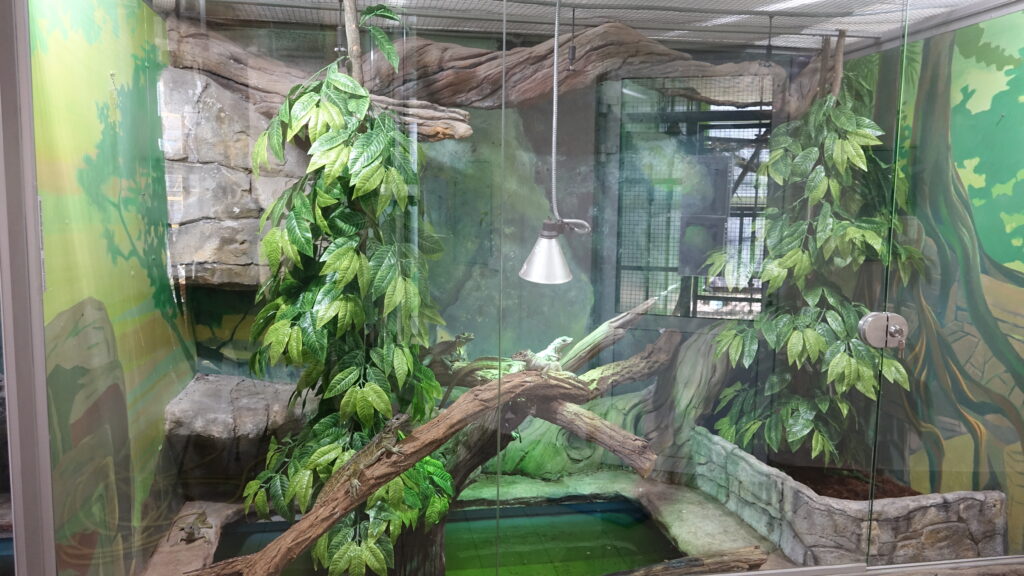
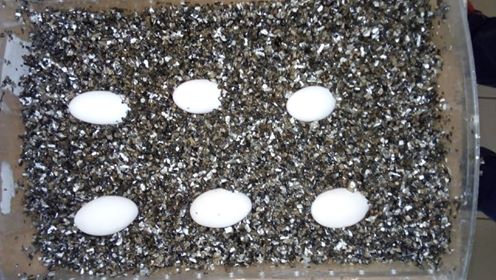
Enclosure. We use large, semi-arboreal enclosure that provides enough space for 3 adult individuals (one male and 2 females). It is recommended space of 200*80*150 cm (80*32*60 in) per one adult individual. Currently we use a bigger enclosure of about 250*150*200 cm (98.42*59.05*80 in) where we keep a group of 1 male and 4 females (1.4). The enclosure is equipped with a pool (50 cm (19.68 in) deep), plenty of logs, basking place, egg-laying site with coconut substrate and artificial plants. As the matter of fact, we used to keep a group of 1.2 in much smaller enclosure. We used bark chips as a substrate. Other substrates (peat, soil mixture or clean sand) can also be OK. They hold moisture and create humid environment, which is essential for proper shedding (Scott Corning, 2015). A pool with water should occupy not less than 2/3 of the enclosure’s area. Water depth should be not less than 30 cm (12 in). Sailfins often jump into the water from significant heights and water should amortize the fall and prevent lizard from serious injuries. Decoration includes horizontal logs and driftwoods installed above the water.
All enclosure sides should be provided with visual barriers to prevent animals from rostral damaging.
We keep juveniles at 120*50*70 cm (47*20*28 in) enclosures with logs and driftwoods. Pool is also much smaller than for adults. We use no substrate.