Keeping and Breeding of West Indian Leopard Gecko (Eublepharis fuscus Börner, 1981) at BION Terrarium Center
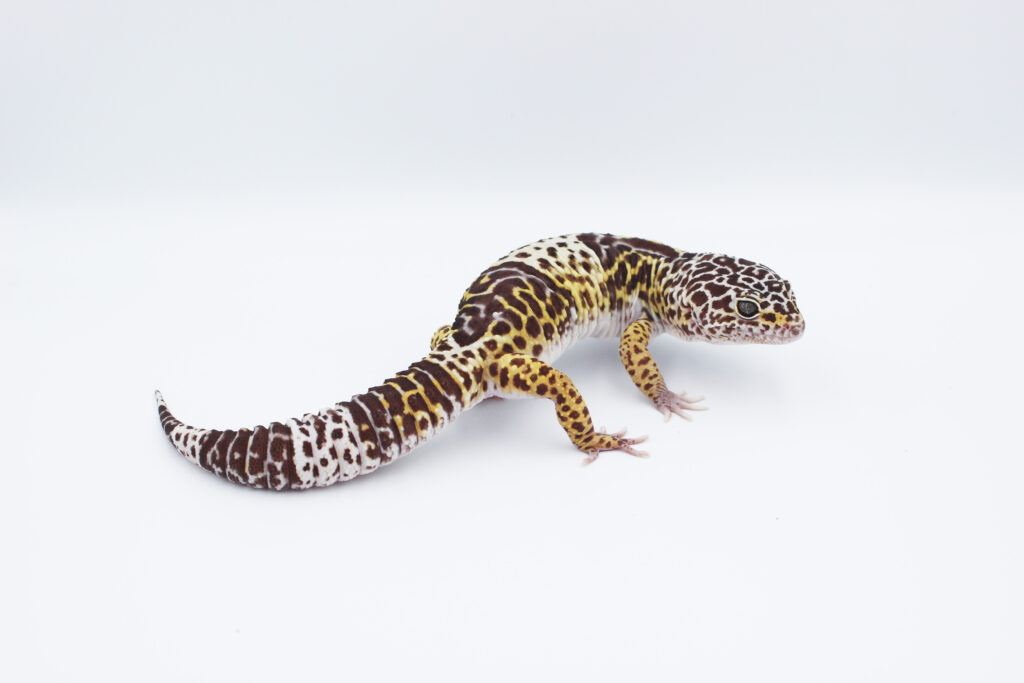
BION Terrarium Center has many years of experience in keeping West Indian leopard gecko (Eublepharis fuscus Börner, 1981).
Eublepharis fuscus Börner, 1981 or West Indian leopard gecko is Eublepharidae species widely spread in western India. Possibly its natural range extends to southeastern Pakistan. The specific name “fuscus” means dark or dusky.
The range of the species lies within Western India (from the Kathiawar peninsula, Federal State of Gujarat in the North up to Poona, Federal State Maharashtra in the South) (Seufer et al., 2005; Harshil, Vyas, 2019).
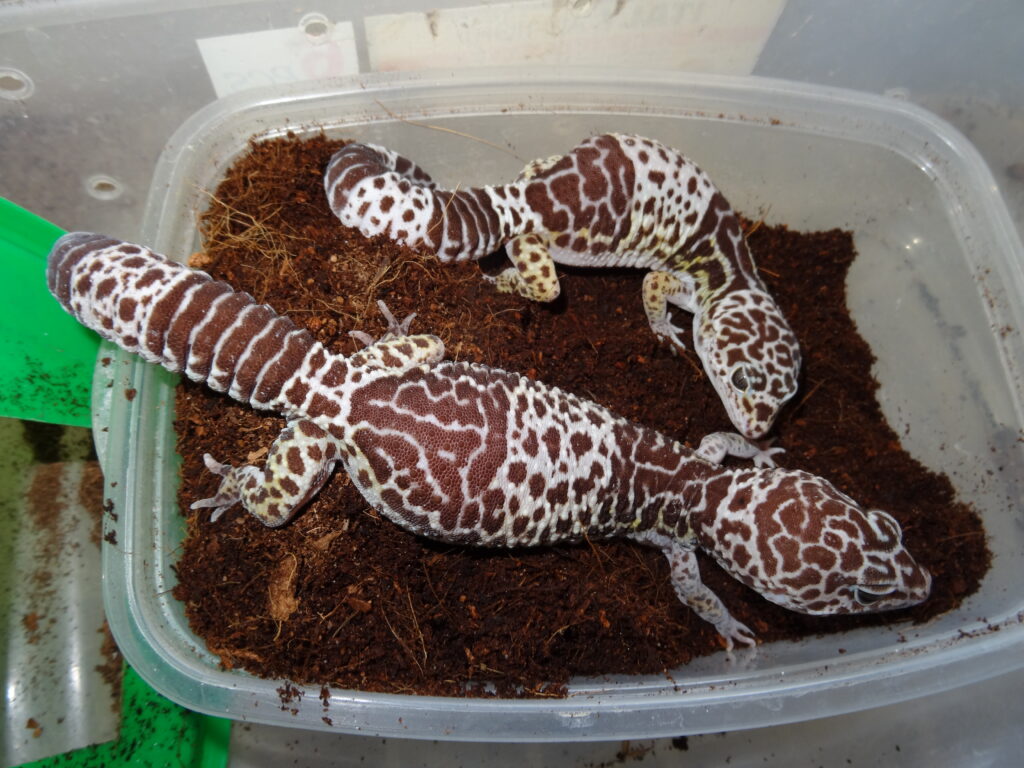
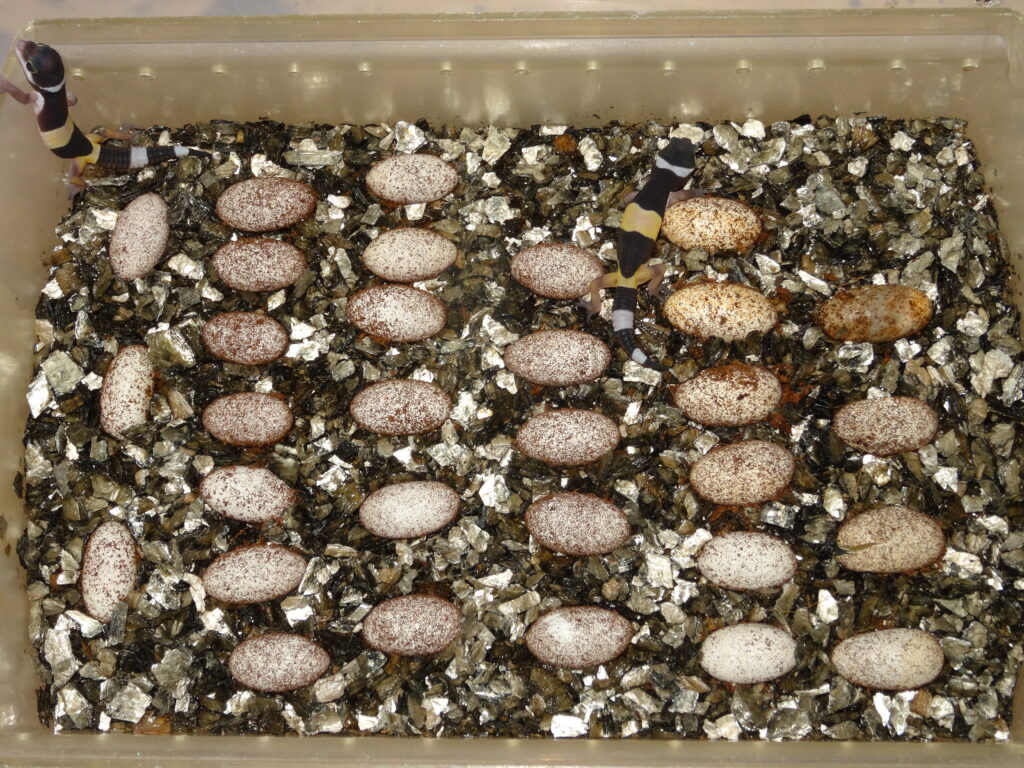
Keeping. We keep adult males and females separately, in pairs (1.1) or breeding groups (1.2 or 1.3), at 90*50*50 cm 35.4*19.7*19.7 in) horizontal terrariums; babies are kept only separately at terrariums of not less than 30*30*45 сm (11.8*11.8*17.7 in).
A spacious humidity chamber that serves as an oviposition box as well is placed inside a terrarium. It is a plastic box with a 5–6 cm (1.9–2.4 in) layer of coconut substrate of medium humidity. The box is covered with a cap that has a hole drilled in order to let the animals in and out. Paper is used instead of substrate. Well-compacted clay layer of 2-3 cm (0.8-1.2 in) can also be used as a substrate. Water dish, a bowl with calcium powder (without D3) and a thermometer for temperature control are obligatory. Several shelters should be provided according to the number of animals. We use pieces of hollow bamboo trunks.
Temperature. Daytime temperature is +28 – +32 °C (82.4 – 89.6 F), at night – +24 – +26 °C (75.2–78.8 F); at the time of winter dormancy – +16 – +18 °C (60.8–64.5 F). Heating with 25W incandescent lamp is used only during wintering months to maintain daytime temperature. During breeding season we use no heating source. UVB is important for successful breeding.
Humidity. Humidity is 70-80% both for babies and adults with double spraying during the day.