Keeping and Breeding of Gidgee Spiny-Tailed Skink (Egernia stokesii (Gray, 1845)) at BION Terrarium Center
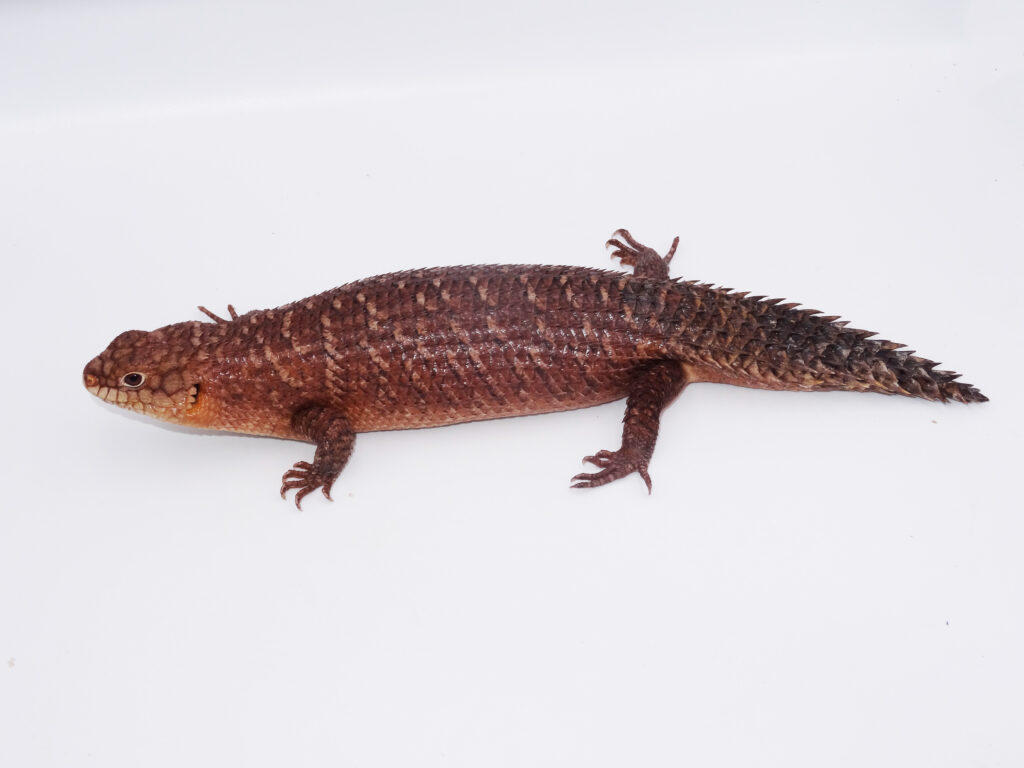
BION Terrarium Center has many years of experience in keeping Gidgee spiny-tailed skink (Egernia stokesii (Gray, 1845)).
Egernia stokesii (Gray, 1845) is a skink species from Scincidae family that demonstrates certain type of social behavior—forming stable social groups (Duffield, Bull, 2002). It is also known as Gidgee skink, spiny-tailed skink, Stokes’s skink and Stokes’s egernia. These skinks are widely distributed in Australia, though having disrupted natural area (Chapple, 2003).
They occur in the southern Northern Territory, eastern Southern Australia, south-west and central Queensland and Western Australia. At present, four subspecies are generally recognized: E. stokesii stokesii, E.s. aethiops, E. s. badia (all reported from Western Australia) and E. s. zellingi that refers to central and eastern Australian populations.
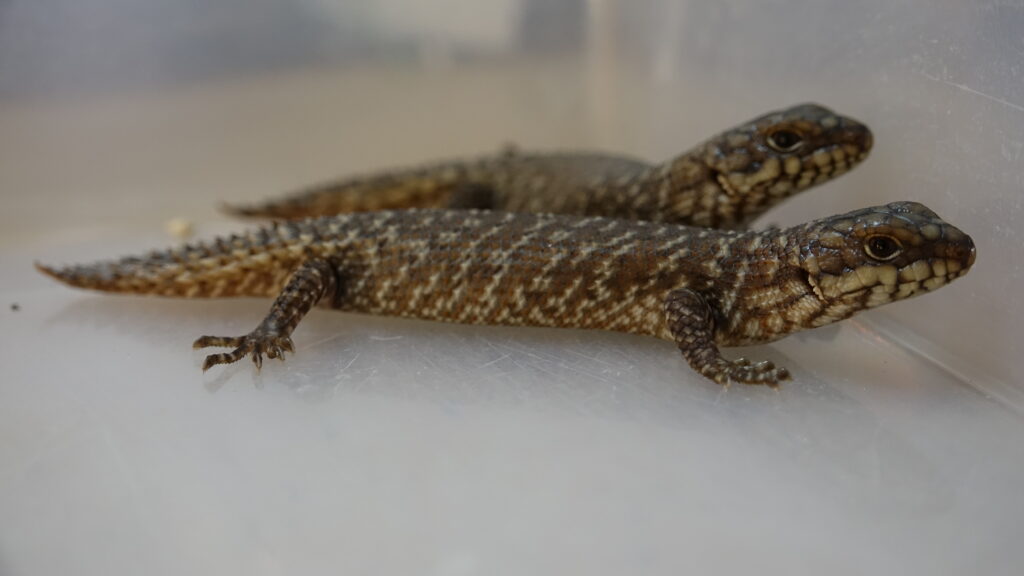
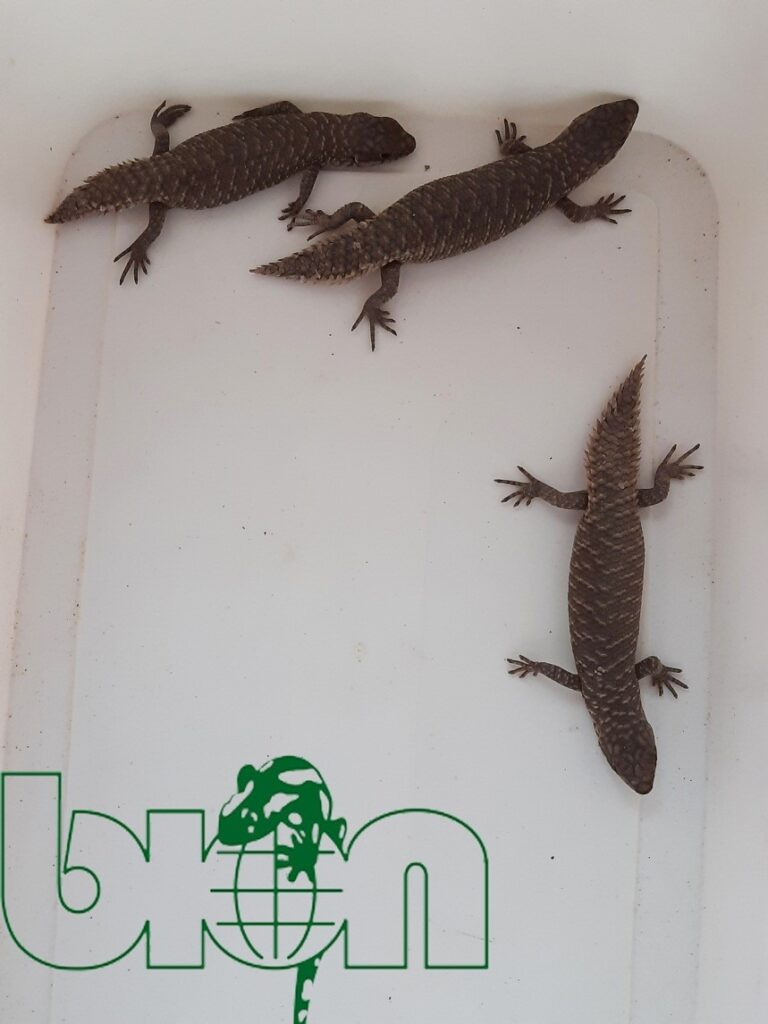
Terrarium. For adults terrarium size is 180*60*50 cm (71*24*20 in). Babies are kept in groups and placed into plastic boxes of 60*60*50 cm (24*24*20 in) on paper or wipes (instead of a substrate) immediately after their birth. Decoration includes a water bowl, logs and wood for climbing, hiding places made of bamboo tubes, pieces of bark, stones. Clay or loam is used as substrate.
Lighting. We use an 18 W lamp SALVINIA REPTISTAR. Lighting period is up to 14 hours in summer and about 9–10 hours in winter. UVB 10.0 light is needed; exposure is up to 14 hours in summer and about 9–10 hours in winter. A100 W spot lamp is used for heating for about 5 hours a day in winter and during the whole day in summer.
Temperature. At daytime temperature is +26 – +32 °C (78.8-89.6 F), at night: +25 – +26 °C (77.0–78.8 F), at basking point it is about +45 °C (113 F).
Humidity. Humidity is 50-60% for adults. During the breeding season, humidity should be increased to 80% by spraying in the morning. Humidity for babies is 60-70%. It is achieved by constant moisture of wipes (instead of substrate).