Keeping and breeding of Nephrurus levis De Vis, 1886 at BION Terrarium Center
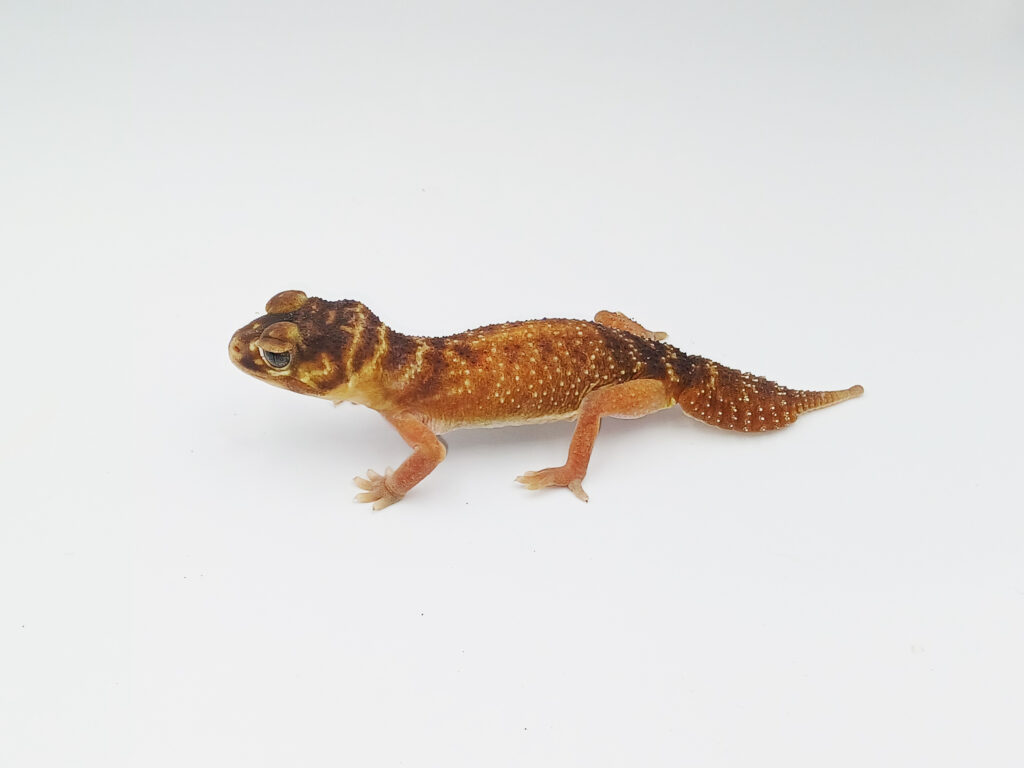
Nephrurus levis (three-lined knob-tailed gecko, smooth knob-tailed gecko or common knob-tailed gecko), is a native Australian gecko species from Carphodactylidae family. There are multiple sub-species of N. levis, these include Nephrurus levis levis De Vis, 1886, Nephrurus levis occidentalis Storr, 1963and Nephrurus levis pilbarensis Storr, 1963 (Fig. 2-4). Aboriginal name of the gecko sound like “Illchiljera”. N. levis is a sturdy gecko of medium size, characterized by a large, triangular head and a short, flattened, carrot-shaped tail that ends in a knob. This tail can be autotomized to distract predators, but unlike other lizards, it possesses only one cleavage point at the base, resulting in the loss of the entire tail when sacrificed. Its snout-to-vent length (SVL) is around 8-10 cm (3.1-3.9 in), while the tail is usually about 2 cm (0.79 in) long. Its long, slender limbs have non-retractile claws on digits, with the outermost one being opposable. The gecko features very large eyes with vertical pupils. On the dorsal side, it exhibits a generally pinkish-grey to purplish-brown coloration with a distinctive pattern of darker and lighter spots, bars, or lines, while the underbelly is white. N. levis is speckled with pale and dark tubercles on the body and tail, often forming bands. The name “levis” stems from its smooth skin, in contrast to the rough skin of Nephrurus asper Günther, 1876 (“asper” meaning rough). Males tend to be smaller than females, and are easy to be sexed thanks to obvious hemipenal bulges at the tail base, which can be seen already at the age of 6 months (Wagner & Lasik, 1996). Both genders can live up to 15 years in captivity
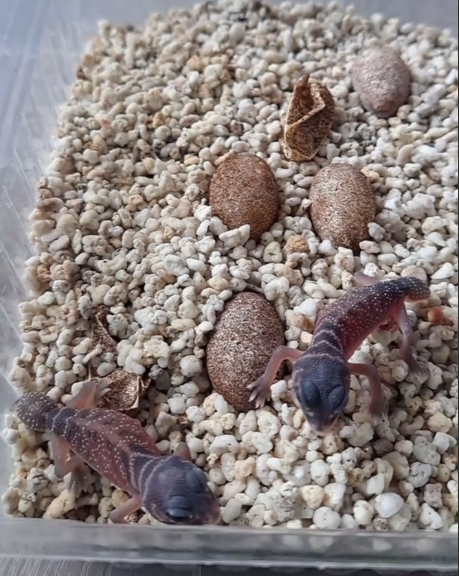
Keeping. We keep adult geckos in horizontal terrariums. Required space is 50×50 cm (19.68×19.68 in) per individual. We use 2-4 cm (0.79-1.57 in) layer of coarse sand as a substrate or paper instead of substrate, but in this case we place a moist chamber filled with 1:1 mix of coconut substrate and sand, which is used also as an egg-laying chamber. Decoration includes several ceramic or wooden shelters and a water dish.