Keeping and Breeding of Spotted Toad-Headed Agama (Phrynocephalus guttatus alpherakii Bedriaga 1906) at BION Terrarium Center
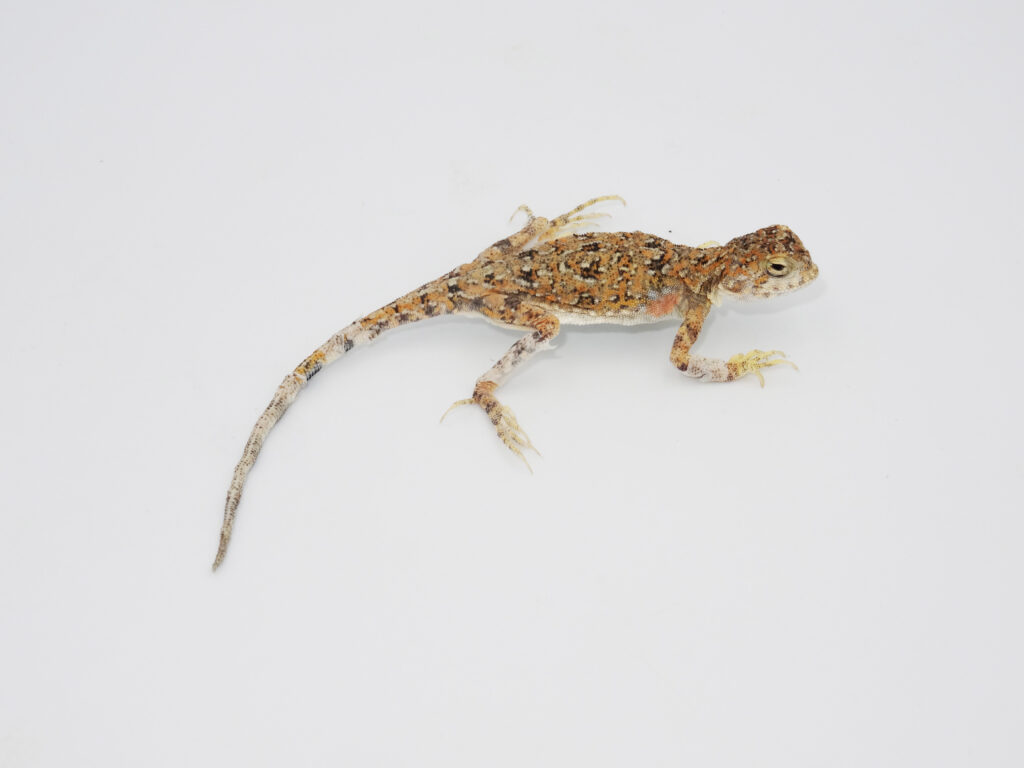
BION Terrarium Center has many years of experience in keeping spotted toad-headed agama (Phrynocephalus guttatus alpherakii Bedriaga 1906).
Spotted toad-headed agama Phrynocephalus guttatus (Gmelin, 1789)is an agama species native to Kazakhstan (Ili River Hollow) and China. These animals are typical inhabitants of dried ecosystems of deserts and semideserts (Банников et al., 1985; Ananjeva et al., 2006). The genus has been named after the Greek words phrynos = toad and “kephale” = head. Morphological characteristics of Phrynocephalus guttatus alpherakii Bedriaga 1906 are almost similar to those of Phrynocephalus guttatus.
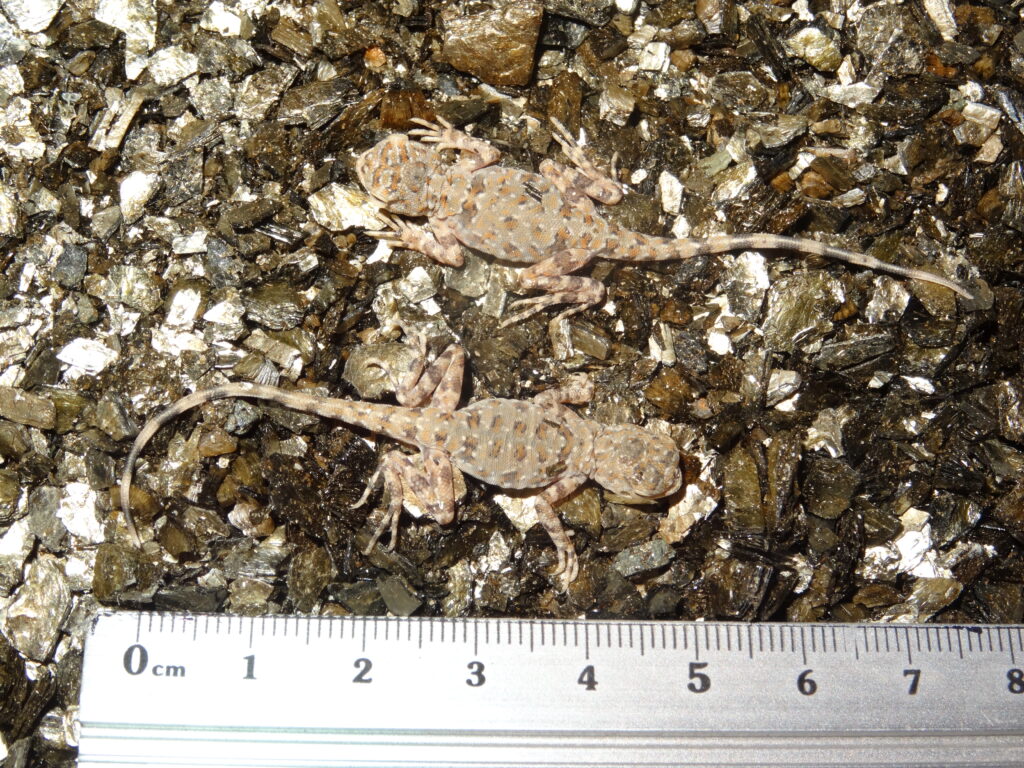
However, some researchers describe the single P. g. alpherakii population in China as separate species Phrynocephalus alpherakii (Sinervo, 2018). But as of now, P. g. alpherakii subspecies status is confirmed by molecular analysis. Therefore the information of Ph. guttatus keeping and breeding given in this article will definitely be useful for people who keep other Ph. guttatus subspecies as well. Adults’ average SVL is about 6.0 cm (2.4 in), TL—about 8 cm (3.2 in). Average total length is 12-20 cm (4.7 – 7.9 in). Average total length of hatchlings is 6–8 cm (2.4–3.2 in). For more info pls visit website.
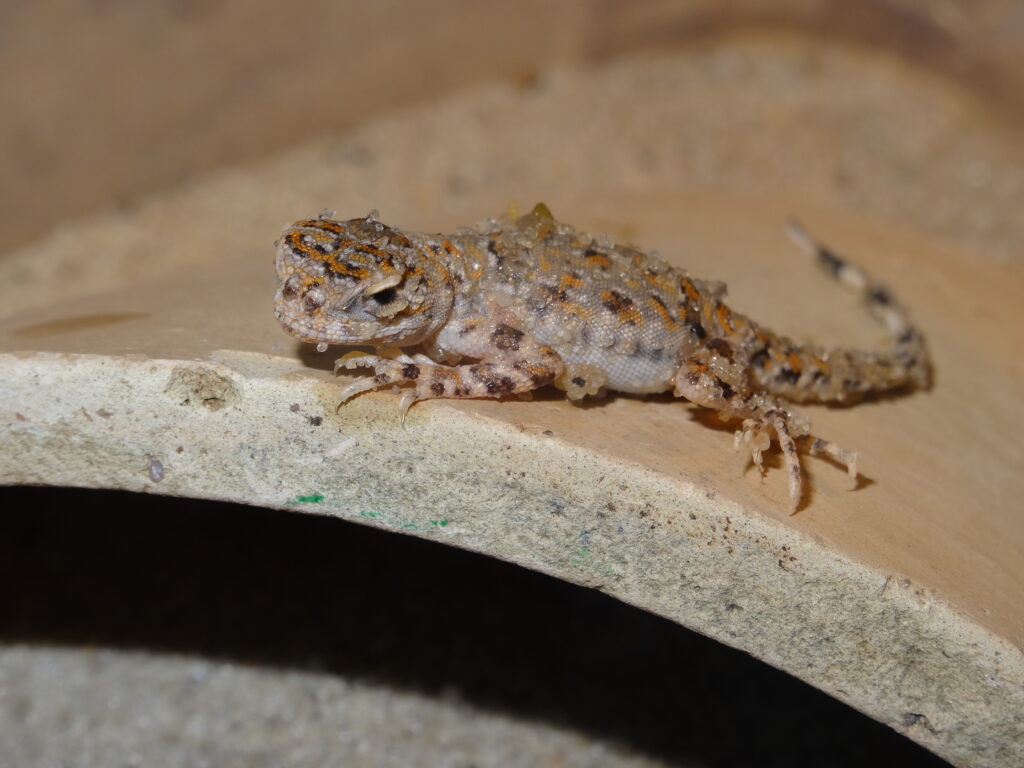
Keeping. We keep adults and babies at 50*100*45 cm (19.7*39.4*17.7 in) horizontally oriented terrariums. Adult individuals are kept in groups that consist of one male and several females. Babies (until sexual maturity) can be kept individually or in groups (6-8 unsexed individuals). The decoration of the terrarium includes clear river sand (5–10 cm (2.0-4.0 in)) and decorative rocks. Tree branches and logs are used as shelters.
Lighting. Zoo Med 5 UVB lamp is used during breeding season for 12–14 hours per day (9:00-23:00); during winter dormancy – for 4 – 6 hours per day. Additionally, a 40W incandescent lamp is used for heating in the warm end of the terrarium. The opposite end is always cooler in order to make a temperature gradient.
Temperature. Daytime temperature is +28 – +32 °C (82.4 – 89.6 F), nighttime temperature – +23 – +27 °C (73.4-80.6 F). The highest temperature at the basking point is +45 °C (113.0 F). UVB is important for successful breeding.
Humidity. Humidity level is maintained at 30–60% with light double spraying (morning and evening) during the day.