Keeping and breeding of armadillo girdled lizard (Ouroborus cataphractus (F. Boie, 1828)) at BION Terrarium Center
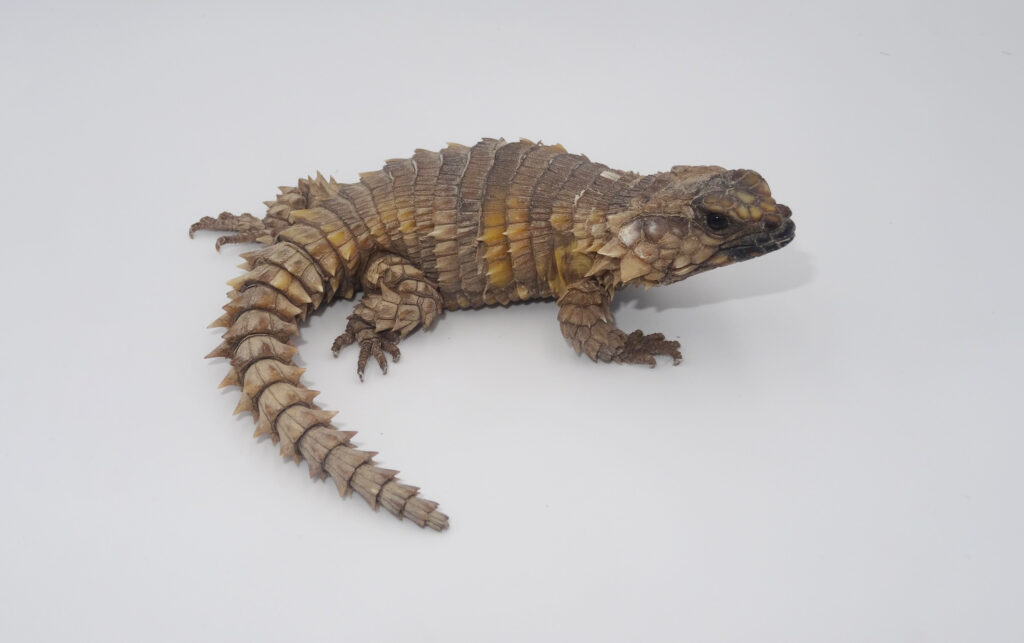
Ouroborus cataphractus (F. Boie, 1828) is a medium-sized lizard that is found along the west coast of South Africa, from Little Namaqualand, Northern Cape Province (Orange river basin) to the Piketberg Mountains in the south, and up to Matjiesfontein in the western Karoo river basin (Fig. 1) (https://animaldiversity.org/accounts/Cordylus_cataphractus/). Its common name is connected with specific defensive position that the lizard uses for self-defense. If being under attack it bites its own tail making a so-called “ring” of its own body. In such position the lizard is able to defend itself with its spikes more effectively and escape down a slope by rolling. In such position the lizard resembles mythical ouroboros (snake from Scandinavian mythology) and the mammalian armadillo. These visual similarities gave it its taxonomic and English common names. This position protects the soft lizard’s belly, as its most vulnerable area.
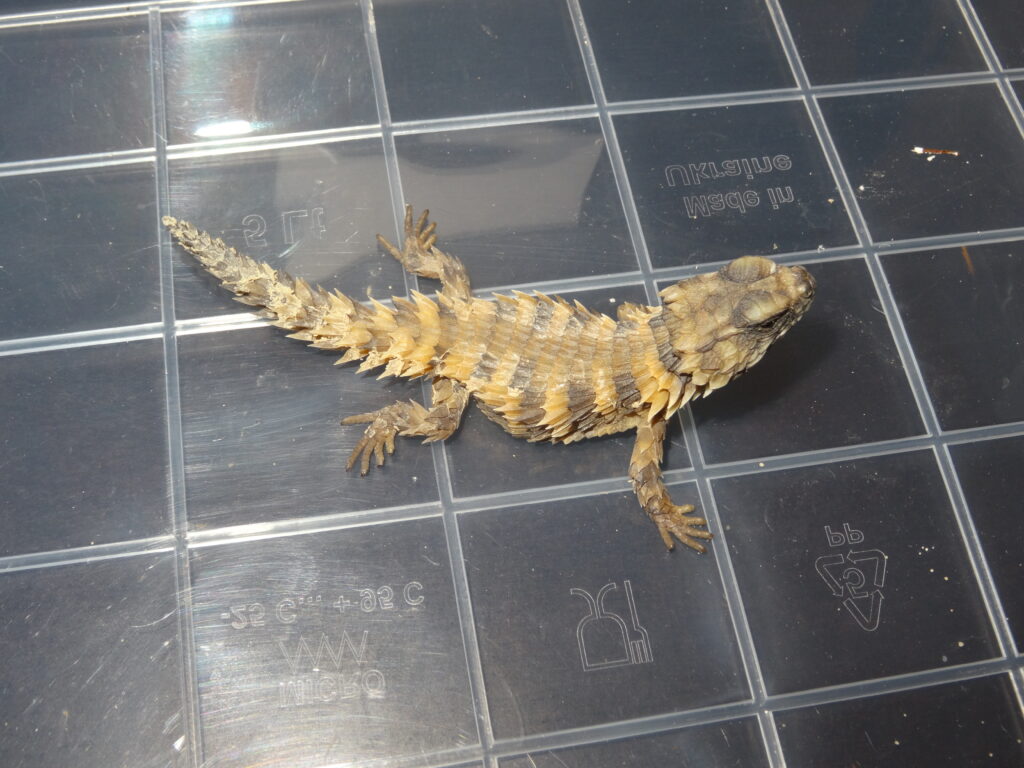
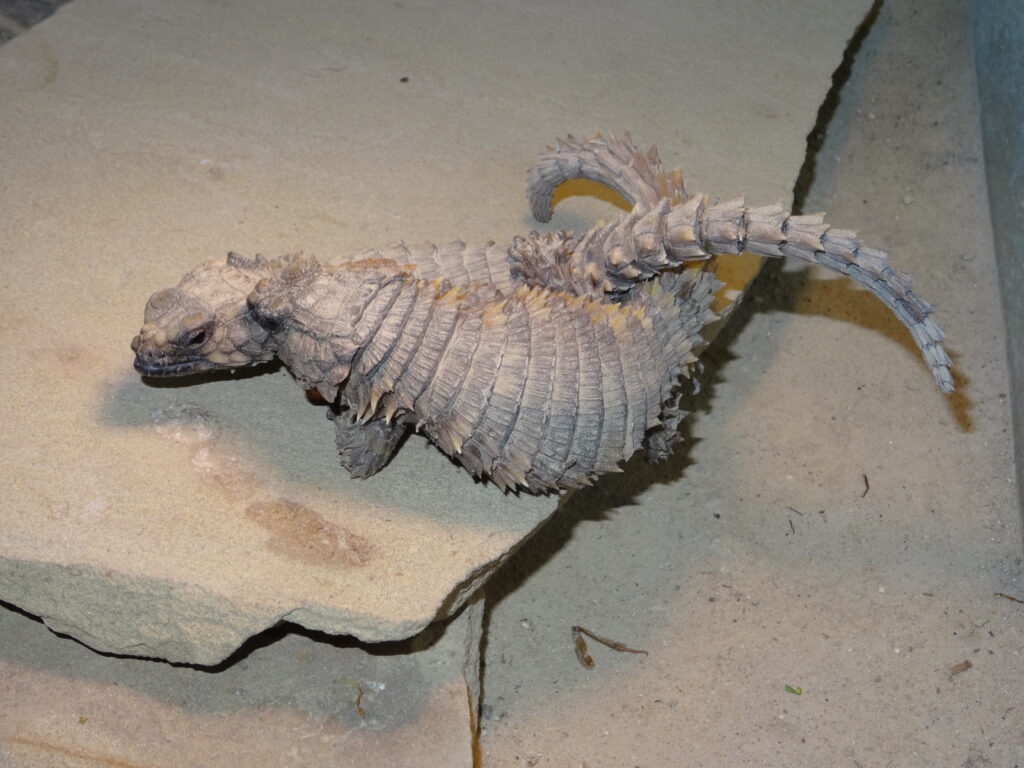
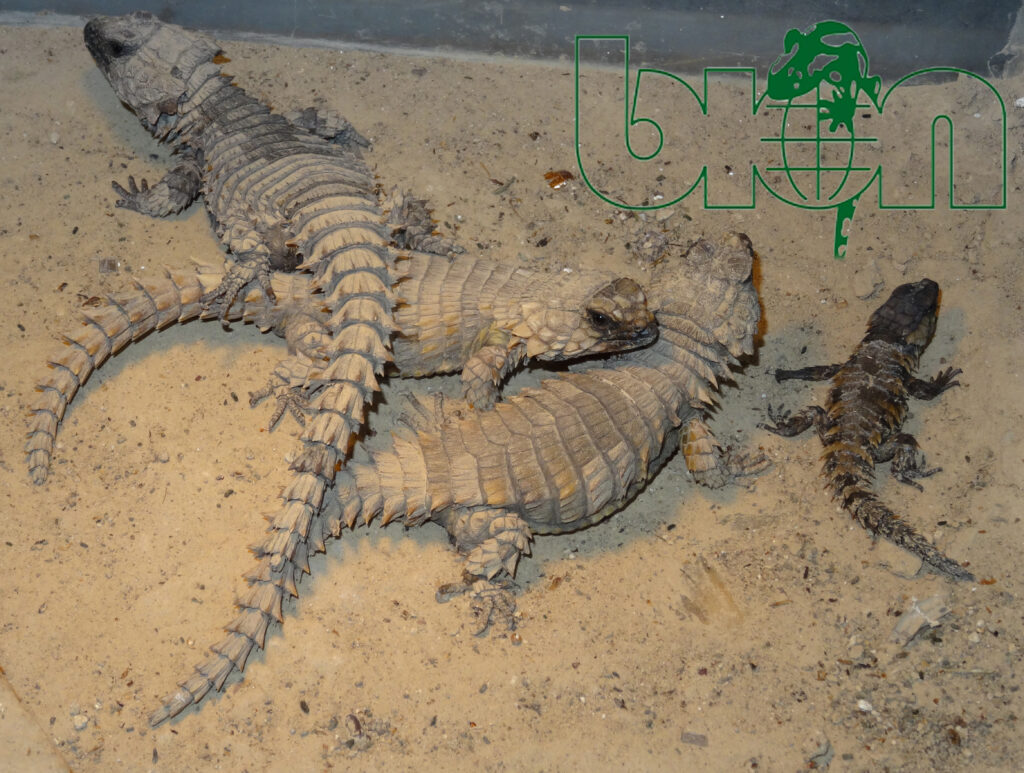
Keeping. As the matter of fact we keep and breed Armadillo girdled lizard since 2000. Starting 2015, we keep our animals in well-harmonized pairs or groups. These groups are quite complicated to form and can take time. A group could include a pair (1.1), a trio (1.2) or several males and female (1.3; 2.3). During the formation of the group, you need to be very careful, since the group, regardless of gender, may not accept one, two or three individuals (recessive individuals are not let out of shelter by dominant, they are not allowed to eat or drink water. Such individuals should be immediately removed from the group and tried to enter into another group We use horizontal terrariums of 90*50*50 cm (35.43*19.68*19.68 in) per group (1:3) or (1:2) If more shelters are offered and the size of the terrarium allows – the group can be enlarged. A large number of shelters (shards, flat stones of the “torn stone” type, from which shelters are formed like a pyramid) is strongly recommended. The shelters should be formed tightly to prevent falling of shelter elements that can make damage or even kill the animals. Armadillo lizards have a habit of hiding in cracks, so the shelter should be moderately cramped. The rocks for basking places are needed. Water dish with fresh, regularly changeable water shall be always present inside the terrarium. Thermometer for temperature control is optional. Well-packed clay layer of 2-3 cm (0.78-1.18 in) is used as a substrate.