Keeping and breeding of Underwoodisaurus milii (Bory de Saint-Vincent, 1823) at BION Terrarium Center
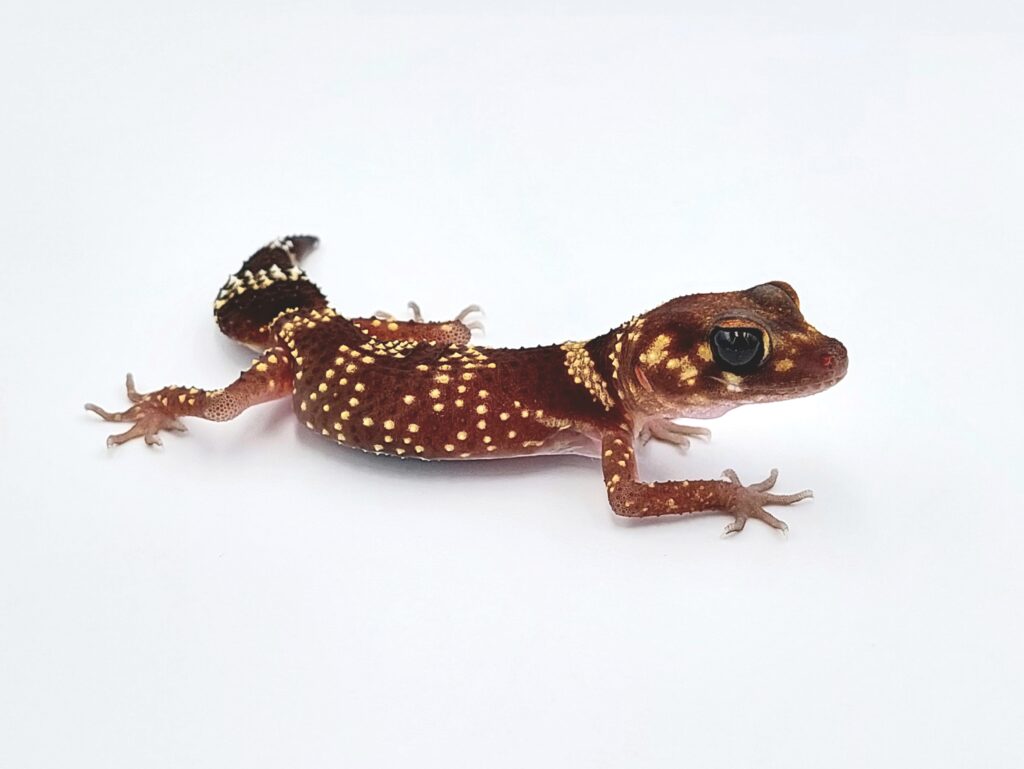
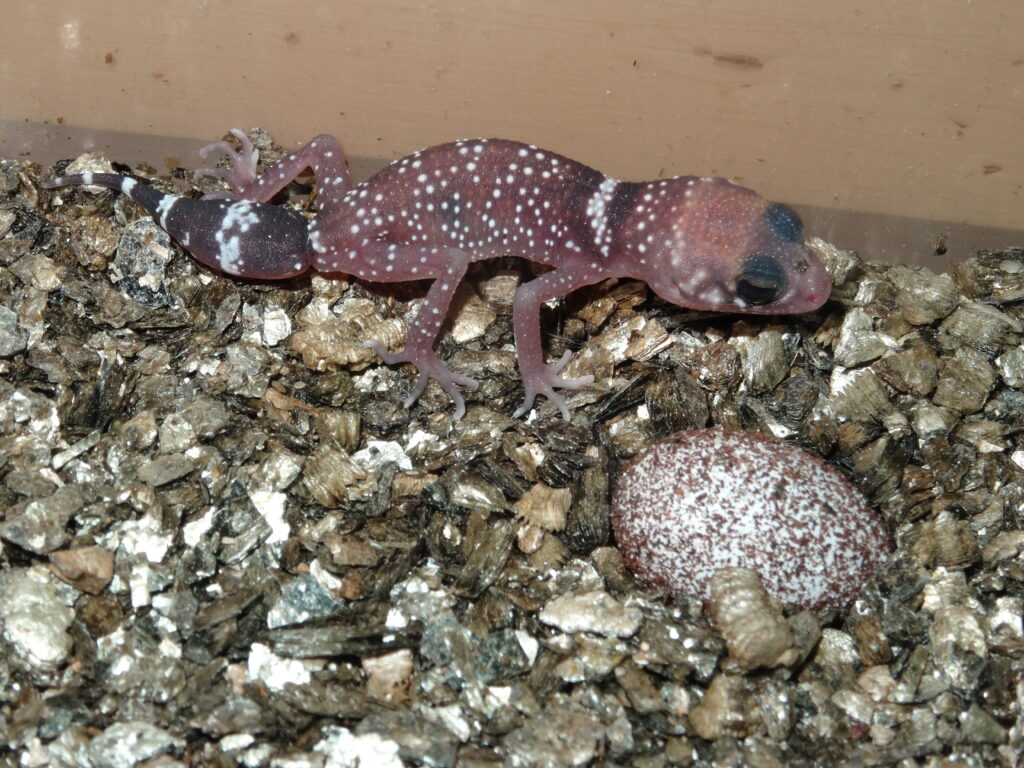
Underwoodisaurus milii (a gecko species from Carphodactylidae family) is commonly known as the thick-tailed or barking gecko, thanks to its distinctive plump tail and sharp, barking defensive call. They inhabit deserts and semi-deserts of Australia, often covered with bushes, xerophytic low-growing forests, rocky areas of semi-deserts, dry sclerophyllous forests and shrubs (Wilson, Swan, 2010; Cogger, 2014). These geckos are orange-brown with rows of light dots and sometimes dark brown with noticeable white transverse stripes. The convex scutes located on the upper side of the body are characteristic and give the outer integument of the lizards a rough appearance. The tail is slightly shorter than the body, very thick at the base and thin at the end, flattened in the dorsal-ventral direction. The head is large, with convex black-gray eyes with characteristic vertical pupils. The legs are long and thin, with claws on the toes, without suckers. Males, as a rule, are much smaller than females, and their heads are larger. Also, males have well-seen hemipenal bulges under the tail base, which can be seen from the age of 6 months. In addition, they have femoral pores on the inside of their hind legs. These pores are used to secrete musk. Also, males are generally darker and tend to have darker and broader tail base. For the first week after hatching, the young have a slight pinkish tint. U. milii usually grows to a total length (including tail) of 120–140 mm (4.7–5.5 in). The weight of adults is 20-25 g. The body color is pink; brown is also noticeable on the back and head. The tail is thick, dark, almost black, in color. The body and tail are covered with small white specks. The paws are quite large (Ijzendoorn, 2007; Oliver, Bauer, 2011). In captivity they live for 8-10 years.
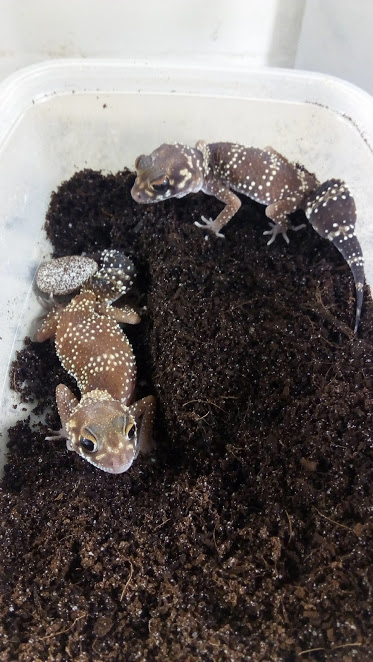
Keeping. Keeping requirements are pretty similar to those for other Nephrurus species (Laube, Porter, 2004).We keep adult geckos in horizontal terrariums or ferplasts (Fig. 5). Required space is 40×40 cm (15.74×15.74 in) per individual. 70 l volumes will work perfect for a pair. We use 2-4 cm (0.79-1.57 in) layer of coarse sand as a substrate or paper instead of substrate, but in this case, we place a moist chamber filled with 1:1 mix of coconut substrate and sand, which is used also as an egg-laying chamber. Decoration includes several ceramic or wooden shelters (Fig. 6) and a water dish with drinkable, regularly changeable water. Some types of sand consist of sharp-edged particles, that can cause traumas on the geckos’ limbs and belly. This should be taken into consideration when choosing the sand for the terrarium (calcium sand, reptisand etc.).