Keeping and Breeding of Indian Star Tortoise (Geochelone elegans Schoepff, 1795) at BION Terrarium Center
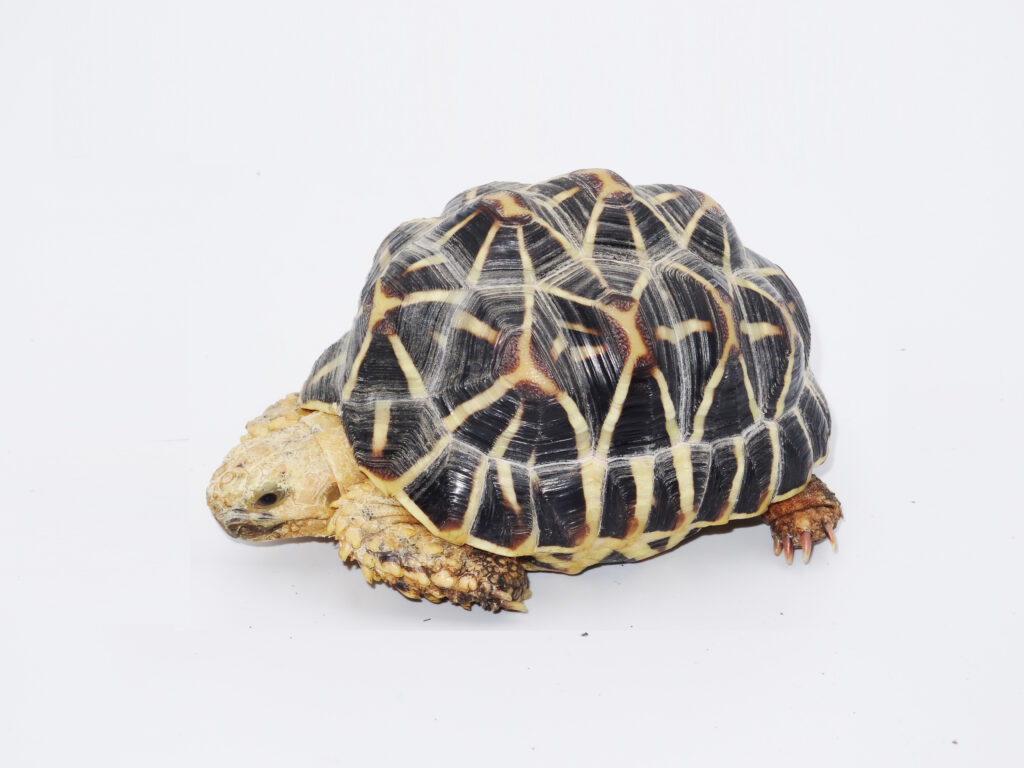
BION Terrarium Center has many years of experience in keeping Indian star tortoise (Geochelone elegans).
Indian star tortoise (Geochelone elegans) inhabits south-eastern areas of Pakistan, India (from Odisha state in the east to Sindh and Kutch states in the west) and Sri-Lanka.
They prefer dry lowland areas and scrub forests, artificial gardens and grasslands. Due to their popularity in exotic pet trade, these tortoises’ protection status was upgraded to CITES Appendix I in 2019 (threatened with extinction), giving this species the highest level of international protection from commercial trade.
Also, this species is listed in IUCN Red List as “Vulnerable”.
Size, appearance and personality are the key factors making them popular among hobbyists and valuable animals in herpetoculture. Adult females can have length of up to 25 cm (10 in), while males are usually under 20 cm (8 in) long. The most active growth happens in the first 10 years of life. Their average lifespan is about 30 years, but the current record is 55 years in their natural habitat.
However, some literature resources indicate that they can live up to 80 years in captivity. Adult specimens can weigh up to 6.6 kg.
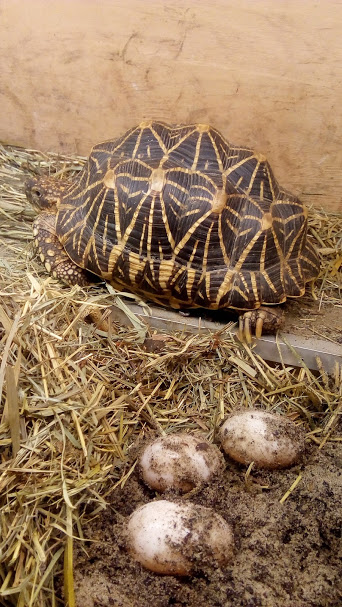
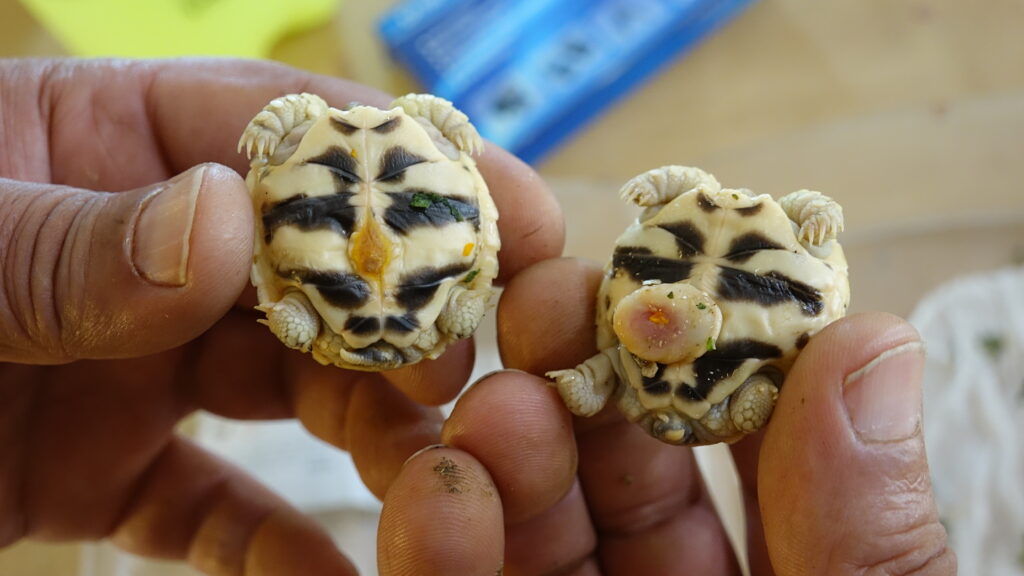
Keeping. We keep adult Indian star tortoises lizards in horizontal enclosures that should be long enough to provide temperature gradient. We use space of 180*50 cm (70*20 in) for breeding stock (1:2). We use hay layer of coarse sand as a substrate.
We also provide a box with coarse sand as a nesting place. We use no special decoration. If one wants to use any items for decoration they should be monolithic in order to prevent tortoises from eating their parts and thus harm their digestive tract.
We provide shelter for hiding. It is big enough to allow tortoises to turn around inside and not to stuck. Pieces of chalk are also put inside the enclosure. Keeping them in outdoor enclosures in summer will positively affect their health.
Lighting. Lighting period is 12/12 hours. The enclosure is lit up well. We use UV lamps and heat lamps (Solar Raptor) in one corner (hot corner). The opposite corner is “cold”, providing a temperature gradient.
Diet. These tortoises are herbivorous. Their diet should be as variable as possible. Our diet for G. elegans include chopped salad mix (dandelions, nettle, hemp, alfalfa, coltsfoot leaves and flowers, vine leaves, plantain, arugula, basil), zucchini, watermelon, pumpkin, tomatoes, carrots (in minimal quantities). Hay is required all year round serving both as substrate and food due to the high fiber content and the ability to cleanse the intestines. White cabbage should not be given.
In the wild, Indian star tortoise males have been observed to reach maturity at around 6-8 years of age and females at 8–12 years. In captivity, tortoises tend to grow and mature faster. Captive bred Star tortoise males may start siring as young as 3-4 years of age. Captive bred females may start laying eggs as young as 5-6 years of age, but over 7 years is probably more typical for females.
We keep males and females together (1:2). Presence of a second male will stimulate mating behavior. We do not provide any wintering period. In winter months, we imitate rainy season by increasing the sprinkling sessions (but not making a swamp in the enclosure). Also, we prolong daylight period from 12 to 14 hours. According to the literature, gestation lasts about 60–90 days.