Keeping and Breeding of Galapagos Lava Lizard (Microlophus albemarlensis (Baur, 1890)) at BION Terrarium Center

BION Terrarium Center has many years of experience in keeping Galapagos lava lizard (Microlophus albemarlensis (Baur, 1890)).
Microlophus albemarlensis also known as Galápagos lava lizard or Albemarle lava lizard, is endemic to the Galápagos Islands, where it occurs on several islands in the western archipelago: Isabela, Fernandina, Santiago, Santa Cruz and Santa Fe, Seymour, Baltra, Daphne Major, Plaza Sur and Rábida.
Of all Microlophus species, this one is the most widespread while other species inhabit single islands (Swash et al., 2005). Some authors however, consider populations on Santiago, Santa Cruz, and Santa Fe (and associated small islands to be distinct species (M. jacobi, M. indefatigabilis and M. barringtonensis, respectively).
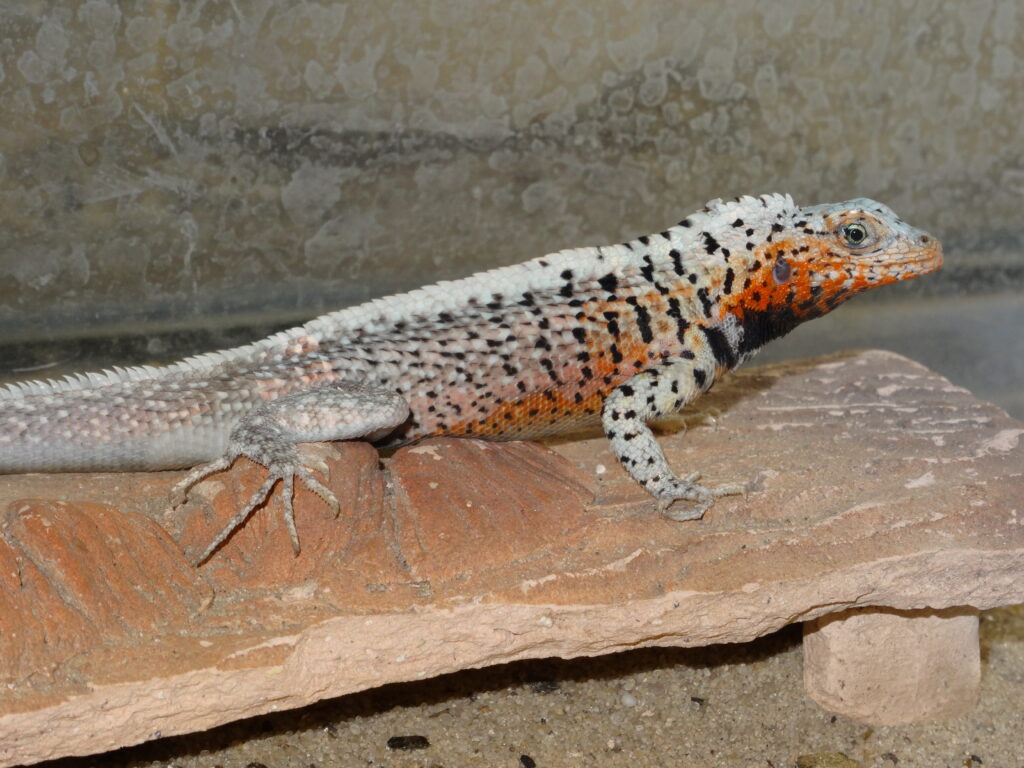
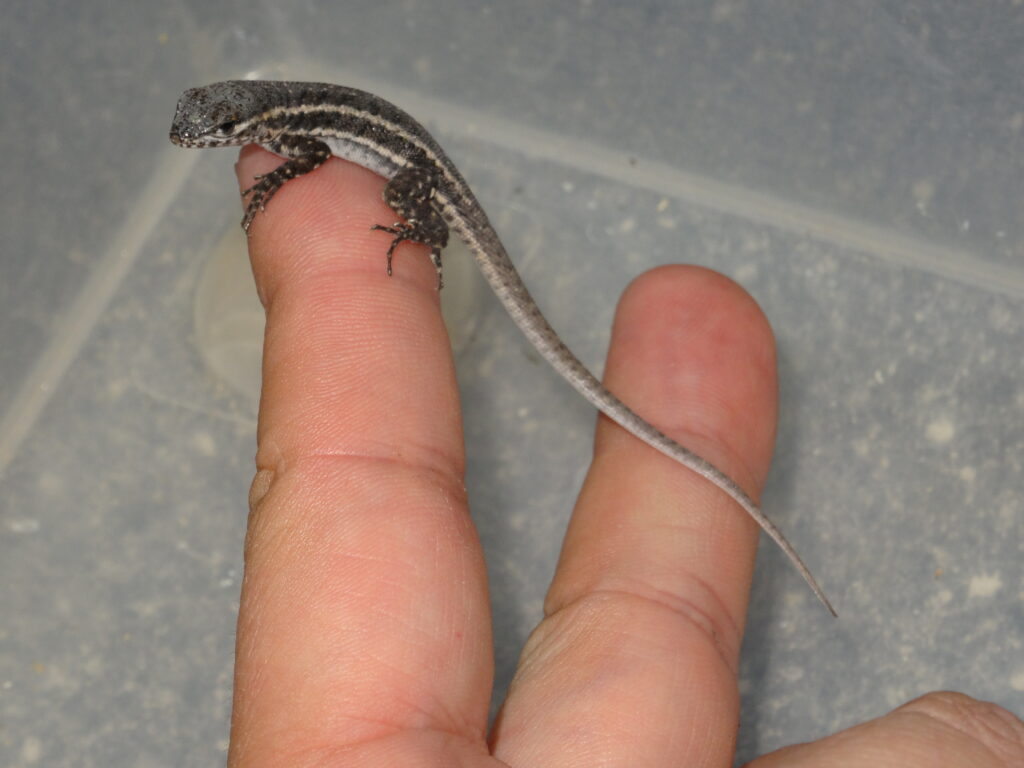
Males are easy to sex being around 5–6 months old. They usually have dark bodies with yellow-green markings, spinal crests of keeled scales, considerably bigger heads and well seen black pattern on the throat. Females are reddish brown in color without markings.
Females also have red or orange cheek patches when they reach maturity during breeding seasons. Cheeks become brighter and more saturated during breeding season and gestation. Like most other lizards, both sexes exhibit changes in color depending on mood. Coloration also depends on where the lizards live. Those that live on dark lava are usually darker than those that live on light sandy land. Males are generally 2 to 3 times larger than females. Adult males have total length ranging from 22 to 25 cm (8.66–9.84 in) while females range from 17 to 20 cm (6.69–7.87 in) (Jackson, 1985; Stebbins, et al., 1967).
Keeping. We keep adult Galapagos lava lizards in horizontal terrariums that should be long enough to provide temperature gradient. We use terrariums of 140*40*40 cm (55*16*16 in) for 1 pair (1:1). We use 2–4 cm (0.79–1.57 in) layer of coarse sand as a substrate. Decoration includes several ceramic shelters, flat stones, snags and sticks. We keep them in pairs since animals of the same sex demonstrate aggression towards each other.