Back
Responsible Herpetoculture Journal: Issue #27
We are not another reptiles magazine. We are the herpetoculture journal for keepers, researchers, field herpers, zoo enthusiasts and anyone who takes reptiles and amphibians seriously – written by the people doing the actual work. The only publication that unites Herpetoculture, Herpetology and Herping in the style of popular science.
A Journal on Herpetoculture, Herpetology and Herping
Subject areas across every volume:
- Husbandry and long-term captive management
- Captive breeding, reproductive biology, and population genetics
- Conservation biology – ex situ and in situ
- Veterinary care and reptile medicine
- Field herpetology and species accounts
“From Keeping to Keeping Alive: The Evolution of Preservation Herpetoculture”
Golden Dragon Reptile Farm in the Philippines
Join contributing editor Jan Pavlas as he explores the exceptional work of the Golden Dragon Reptile Farm in breeding the stunning, yellow-headed water monitor (Varanus cumingi). Discover the local outdoor husbandry, meticulous breeding logs, and unique dietary habits of Mindanao's apex predator — including their vital role as environmental guardians against toxic, invasive cane toads.
Responsible Herpethoculture Journal. Issue #27
The rest of Responsible Herpethoculture Journal. Issue #27
is waiting.
You've reached the end of your free preview. Become a member to read all 68 pages — and every issue since 2022 — the only herpetoculture journal where every claim is answerable to science.
- Every article, current and archived in full
- PDF downloads of every issue, Volume 1 to today
- Early access before public release
Become a member
Already a member? Log in
See What’s Inside an Issue
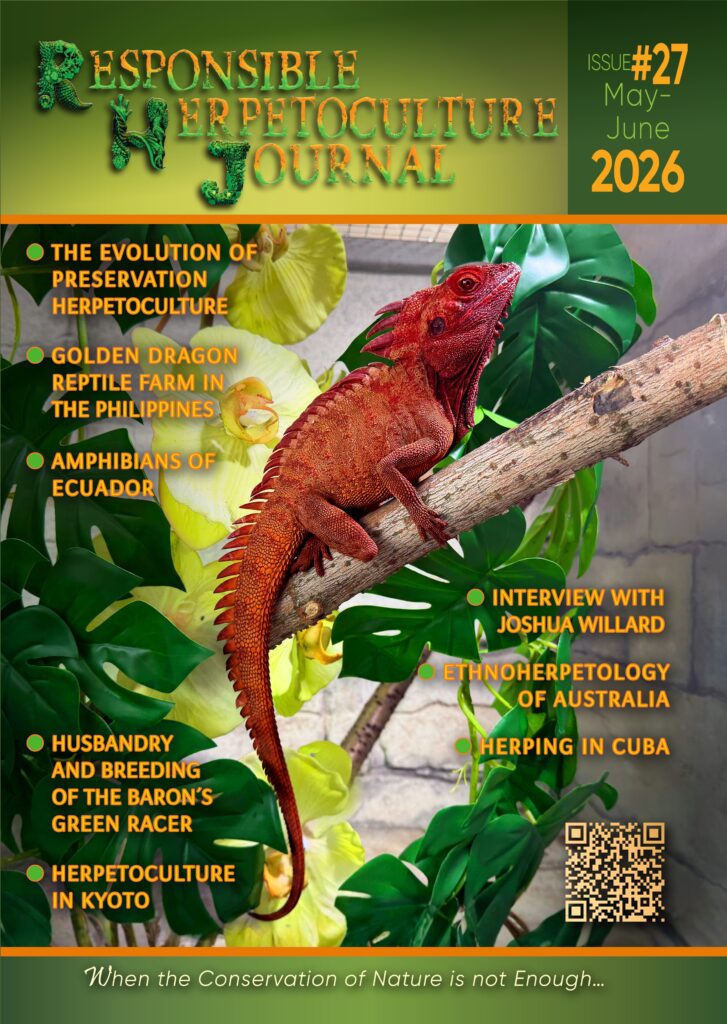
RH Journal #27 (May-June 2026). Contents
If imports stopped tomorrow, how many captive species would still exist in ten years? Philippe de Vosjoli, co-founder of the American Federation of Herpetoculture and creator of the Vivarium magazine, argues that the color morph market and the…
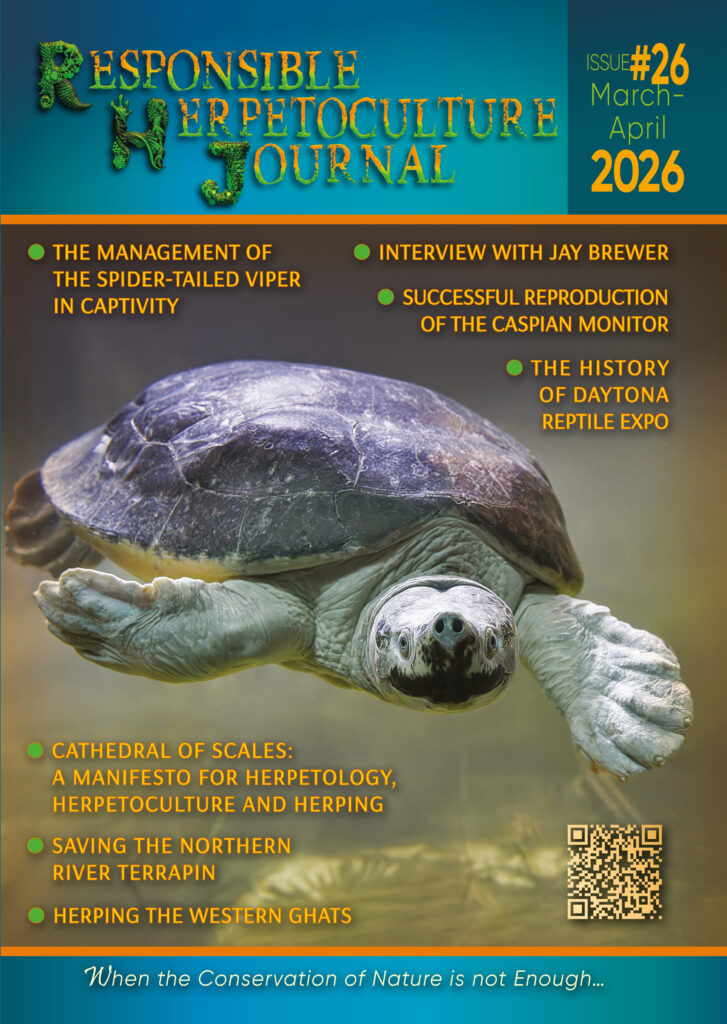
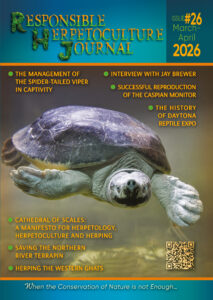
RH Journal #26 (March-April 2026). Contents
CONTENTS: – Editorial by Dmitri Tkachev – Cathedral of scales: a manifesto for Herping, Herpetology, and Herpetoculture – by Petr Neсas – Saving the Northern river terrapin(Batagur baska): the story of the unique in situ and ex situ…
All Reptiles Magazine Issues - Current & Back
Twenty-six reptiles magazine issues have been published since March 2022, with a new volume every two months. All reptiles magazine issues are produced in full color, formatted for both screen and print, and available as PDF downloads to members from the day of publication. Browse the three most recent issues below. The complete archive, every volume from Issue #1, is available with membership.


What Each Issue Contains
Research Articles
The RH Journal publishes studies on captive care, species biology, and breeding outcomes – the kind of rigorous content that makes this herpetoculture journal different from conventional reptile publications. Most hobbyist outlets do not commission it. Most academic journals consider it too applied to publish. Here it finds its place. Authors include practicing academics and keepers with decades of hands-on knowledge.
Recent research has covered inbreeding depression in lizard families currently losing genetic diversity through line-breeding, thermal regulation studies in Uromastyx populations maintained under different substrate conditions, and multigenerational captive breeding outcomes for species where wild import is now restricted by law.
Field Reports & Conservation Updates
First-hand observations, habitat data, and conservation status updates from herpetologists working in the field. They are primary accounts – the kind of material that takes seasons to collect and rarely finds its way into print because it does not fit the format of conventional academic publishing.
Recent volumes have included field reports from the Ukrainian Carpathians on the distribution of Triturus montandoni and Salamandra salamandra in high-altitude mixed forests. A further piece covered Cnemaspis diversity in limestone karst systems across Cambodia and Vietnam – material directly relevant to the captive management of a genus that receives almost no research attention in English-language science. Another examined the conservation status of Melanobatrachus indicus – the galaxy frog, one of the most ancient surviving frog lineages – under escalating pressure from unregulated wildlife photography in the Western Ghats.
Veterinary & Health
Case studies, treatment protocols, and health management guidance from reptile veterinary specialists. This is among the most difficult content to find in any format: specific, actionable, and written by practitioners who have actually treated the species in question. Topics have included metabolic bone disease management in Uromastyx, respiratory infection diagnostics in Boa constrictor, and parasitology considerations for wild-caught animals during quarantine.
Become a Member.
Access Every Issue of the RH Journal
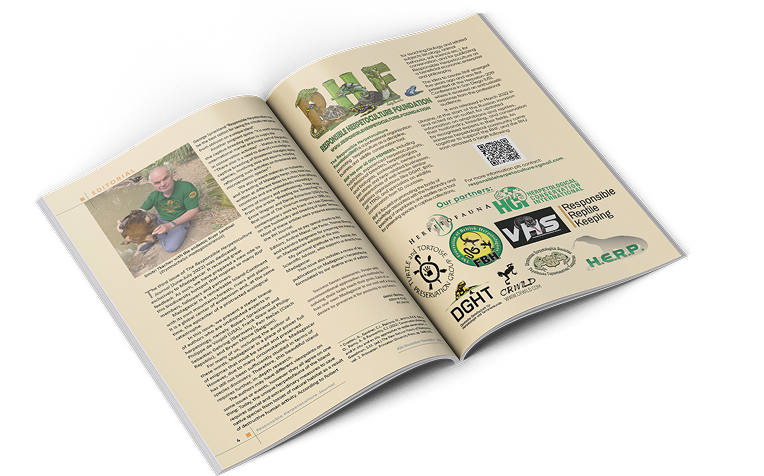
Behind every issue of the RHJ is a community that has spent years watching, studying, and advocating for some of the most misunderstood animals on the planet. Your membership gives you access to the full archive (with every issue downloadable from Volume 1 onward). It connects you to a network of researchers, experts, and keepers.
Membership gives you: full digital RH Journal archive from 2022, early access to new issues, discounts on RHF publications and events, member-only community forums, and access to exclusive care sheets. Plans start at $90/year.
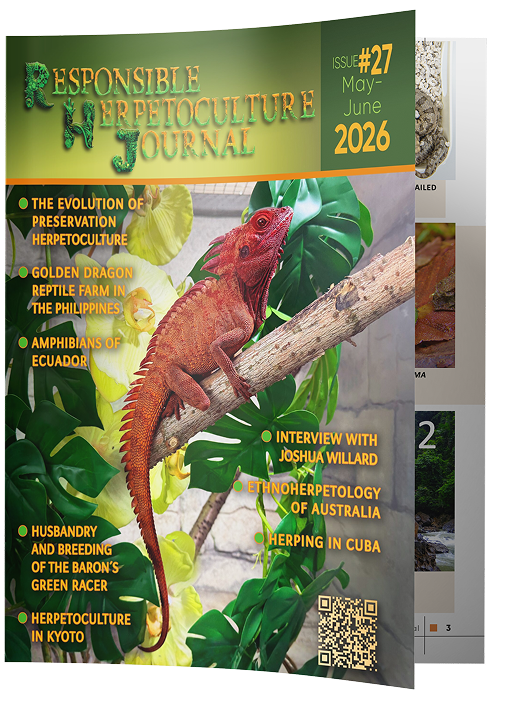
Responsible Herpetoculture Journal: Issue #27
$20.00Hold the May–June 2026 issue in your hands — a full-color print magazine made for your shelf, not just your screen. Editor Dmitri Tkachev opens with how the hobby is moving from keeping to keeping alive, and from there Issue #27 travels the world: breeding the yellow-headed water monitor (Varanus cumingi) at the Golden Dragon Reptile Farm, the amphibians of Ecuador, and herping through Cuba’s Caribbean biodiversity.
- Emerald elegance — husbandry and breeding of the Baron’s green racer (Philodryas baroni), by Ondřej Škach
- Keeping and breeding the painted agama (Laudakia stellio brachydactyla) by Sam Aneca, and loggerhead musk turtles (Sternotherus minor minor) by Dmytro Kudlaienko
- Herpetoculture in Kyoto: inside a major Japanese reptile expo, by Wataru Himeno
- How Joshua Willard built a herpetocultural empire, by Foster Reves
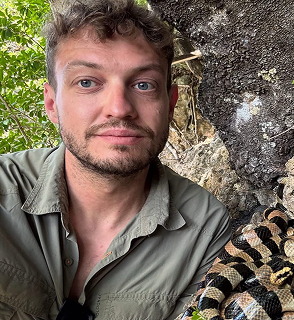

Our Editorial Board
The editorial board currently spans eight countries: Australia, the United States, mainland Europe, the United Kingdom, Southeast Asia, etc. And it includes practicing field herpetologists, veterinary specialists, zoo curators, and senior keepers with established track records in captive breeding and conservation.
Unlike a hobbyist reptiles and amphibians journal, where editorial decisions are made on readability and market appeal, the RH Journal board evaluates every submission against consistent scientific standards. That process, not the reputation of the publication, is what makes the content trustworthy. Readers and subscribers in 50 countries.